


Dermal fillers are gel-like injections that smooth wrinkles, restore lost volume and reshape areas such as the lips, cheeks and jawline without surgery. Results appear straight away, and most people return to normal activities quickly. If you are considering dermal fillers in Lahore, this guide explains the types, uses, risks, aftercare and cost in Pakistan.
The product matters, but the person injecting it matters more. Poor technique and fake filler can cause serious problems. Read on to learn what to ask before you book, and contact our team if you want personal advice.
What Are Dermal Fillers?
Dermal fillers, also called soft tissue fillers or facial fillers, are injectable gels placed just under the skin to create a smoother or fuller look. In the United States, the FDA regulates them as medical devices.
Most approved fillers are temporary because the body gradually breaks them down and absorbs them. This is why results fade and treatment is repeated to maintain the effect.
How Dermal Fillers Work
A provider injects small amounts of gel under the skin using a thin needle or a cannula. The gel adds volume, lifts folds and softens creases from beneath. Some products, such as poly-L-lactic acid, also encourage your body to produce its own collagen, so the effect builds gradually.
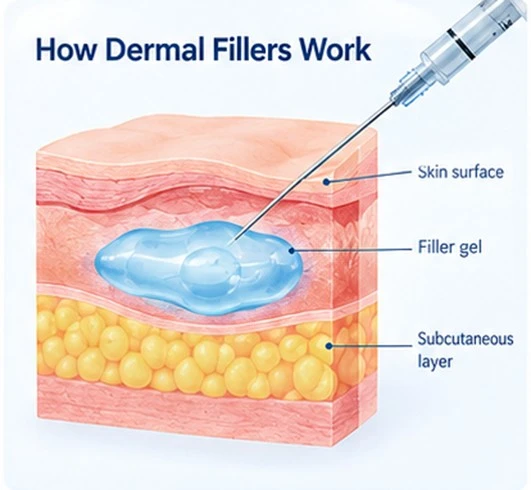
Diagram: how filler gel adds volume beneath the skin.
Why the Face Loses Volume With Age
With age, skin loses collagen and subcutaneous fat, becomes thinner and starts to sag. Facial muscles then sit closer to the surface, so smile lines and crow’s feet show more. Sun exposure, heredity and lifestyle add to the loss of skin elasticity, and volume shifts from the cheeks toward the jawline.
Types of Dermal Fillers
Dermal fillers differ in their ingredient, texture and how long they last. Your provider chooses a product based on the area, the depth of the wrinkle and your goals.
Below are the main types, followed by a quick comparison table.
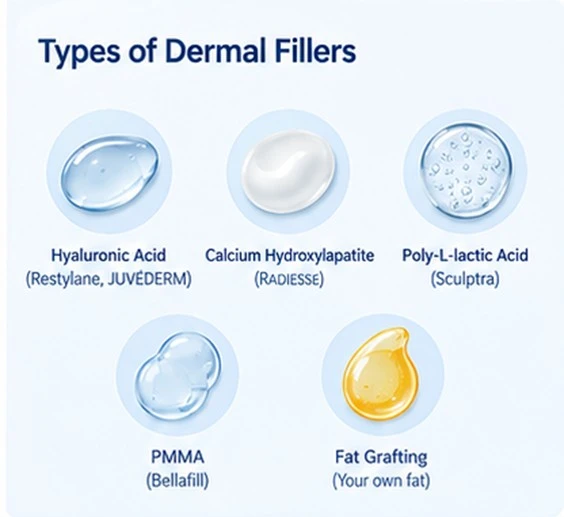
Visual overview of common filler categories. Product choice and duration vary; confirm details with a qualified clinician.
Hyaluronic Acid Fillers (Restylane and JUVÉDERM)
A hyaluronic acid dermal filler is the most common type. Hyaluronic acid is a sugar naturally found in the body that holds water and keeps skin hydrated. Brands include Restylane and JUVÉDERM, and results typically last six months to a year. It is also the type that can be reversed with an enzyme.
Calcium Hydroxylapatite Fillers (RADIESSE)
Calcium hydroxylapatite is a mineral found in bone and is used in RADIESSE. Providers use it for deeper wrinkles and to add volume or contour, including along the jawline. Results usually last around a year, although some sources report longer for deeper wrinkles.
Poly-L-Lactic Acid Fillers (Sculptra)
Poly-L-lactic acid (PLLA), found in Sculptra, is a biodegradable synthetic material that helps the body produce its own collagen. It restores facial volume lost to ageing or illness and often needs two or three sessions. Results can last two years or more.
PMMA Fillers and Fat Grafting
PMMA fillers, such as Bellafill, use tiny beads that stay under the skin, so the result is permanent. Fat grafting is different: fat taken from your own body by liposuction is injected into the face. It needs an extra procedure and a longer recovery.
Temporary vs Permanent Fillers
Most fillers are temporary, which allows adjustment as your face changes. Permanent fillers cannot be absorbed, so problems are harder to correct, and they are generally not recommended as a first filler treatment. Discuss the long-term trade-offs with your provider before choosing.
| Filler type | Example brands | Typical duration | Can hyaluronidase dissolve it? |
| Hyaluronic acid | Restylane, JUVÉDERM | 6 to 12 months | Yes |
| Calcium hydroxylapatite | RADIESSE | About 1 year (some sources report longer) | No |
| Poly-L-lactic acid | Sculptra | Up to 2 years or more | No |
| PMMA | Bellafill | Permanent | No |
| Fat grafting | Your own fat | 1 to 2 years | No |
What Can Dermal Fillers Treat?
Dermal fillers can treat both lines and lost volume. In the US, FDA-approved uses include moderate to severe wrinkles and folds, added volume in the lips, cheeks, chin and back of the hand, and some acne scars on the cheek.
These approvals apply to adults aged 22 and older. Other areas, such as the jawline and temples, are also commonly treated but are not listed as approved uses on the FDA’s current page, so ask your provider whether a product is approved for your area.
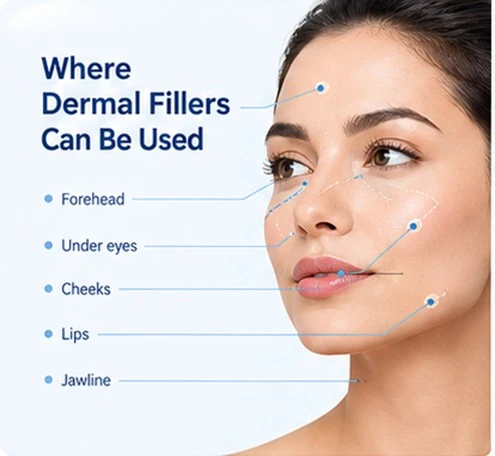
Illustration of common facial treatment areas; not every area is approved for every product.
Wrinkles, Fine Lines and Smile Lines
Fillers soften deep creases such as smile lines, laugh lines, marionette lines and nasolabial folds by adding support beneath the skin. They work best on lines caused by lost volume. Lines caused by repeated muscle movement, such as crow’s feet, are often treated with Botox instead.
Facial Volume Loss in the Cheeks and Temples
Treating the cheeks and temples brings back facial volume lost with age and can give a fuller, more youthful look. Providers may choose hyaluronic acid, calcium hydroxylapatite or poly-L-lactic acid, depending on how much volume is needed and how long you want the result to last.
Lip Fillers
Lip fillers plump thin lips and are among the most requested treatments. Hyaluronic acid is commonly used because it can be dissolved if you are unhappy with the result. Looking at lip fillers before and after photos can show a provider’s style, but make sure the images are real, unedited and of that provider’s own patients.
Under-Eye Hollows and Tear Trough
Fillers are sometimes used to soften under-eye hollows and the dark shadows beneath the eyes, an area often called the tear trough. This is a delicate area, and the FDA lists the area around the eyes among unapproved injection sites. Ask your provider about the risks and product choice before treatment.
Jawline and Chin Contouring
Dermal fillers jawline treatment adds definition by placing filler along the jaw and chin. A jaw dermal filler can sharpen a soft jawline or balance a recessed chin without surgery. Products such as calcium hydroxylapatite are often used for contouring, and results should look balanced rather than overdone.
Liquid Rhinoplasty (Nose Reshaping)
Liquid rhinoplasty, also called non-surgical rhinoplasty, uses filler to improve the contour of the nasal bridge and tip. Because filler only adds volume, it cannot make the nose smaller. The FDA lists the nose among unapproved injection sites, so ask about the provider’s experience and the risks before booking.
Acne Scars
Filler can lift recessed scars, including some acne scars on the cheeks, by raising the skin’s surface. The FDA has approved certain fillers for acne scar correction on the cheek. Results depend on the scar type, so a consultation with a dermatologist is a good first step.
Hand Rejuvenation
Hands show age too. Filler injected into the back of the hand can restore volume and a smoother look, and the FDA lists this as an approved use. Temporary difficulty performing activities has been reported only after injection into the hand, so ask what to expect.
Dermal Fillers vs Botox and Facelift Surgery
People often confuse fillers with Botox, but they solve different problems. One adds volume, the other relaxes muscles. Neither replaces surgery when significant sagging is present.
Dermal Fillers vs Botox: Key Differences
Fillers add volume and soften static lines. Botox and similar botulinum toxin products are injectable drugs that stop muscles from tightening, so expression lines show less. Fillers work straight away, while Botox usually starts working in about three to four days.
- Fillers: gel that restores volume in cheeks, lips and folds
- Botox: muscle relaxer for frown lines, forehead lines and crow’s feet
Can You Combine Fillers and Botox?
Many providers combine both for a fuller refresh, sometimes called a liquid facelift. However, the FDA notes that combining fillers with Botox has not been studied in a controlled clinical trial. Ask your provider to explain the plan, the benefits and the risks.
What Dermal Fillers Cannot Do Compared With a Facelift
Fillers cannot lift heavily sagging skin or match the results of a facelift. For some people, a facelift, brow lift or eye lift is the better option. Fillers may delay that decision, but they are temporary and need ongoing treatment to maintain results.
Who Is a Good Candidate for Dermal Fillers?
Adults of all ages may benefit from dermal fillers, particularly those with early lines, volume loss or specific contour concerns. FDA-approved uses apply to adults aged 22 and older.
A consultation is essential because some health conditions make fillers unsuitable.
Who Should Avoid Dermal Fillers
Fillers may not be suitable for people with bleeding disorders, a weak immune system or certain allergies. Before treatment, tell your provider about:
- Allergies, especially to animal-derived materials such as collagen
- A history of bruising or bleeding after similar procedures
- Neurological problems or skin conditions
- All medications you take
- Pregnancy or breastfeeding, because the FDA says the safety of fillers is unknown
- A tendency to keloids or raised scars, where safety is also unknown
- Inflamed or infected skin in the area, since treatment should be delayed
Dermal Fillers for Men
Men with deep creases around the eyes and mouth can see good improvement from fillers. Recovery is usually 24 to 48 hours. Avoid the gym for the first one to two days, and avoid rubbing or massaging the area for 24 hours.
Dermal Filler Procedure: What to Expect
A filler session is usually quick and done in an outpatient setting, and most people return to their routine soon afterward. Knowing the steps helps you feel prepared.
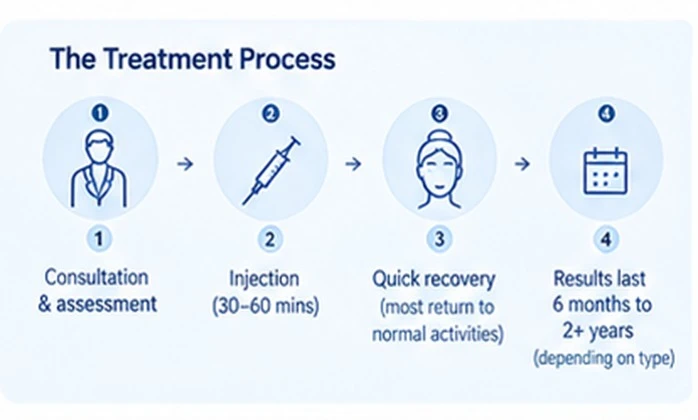
Typical treatment journey: consultation, procedure, recovery and follow-up.
If you want to see what we offer, visit our services page.
Consultation and Medical History
Your first visit is a consultation. The provider examines your face, discusses your goals, reviews your medical history and medications, and may mark the treatment areas or take photos. They then recommend a product and explain the risks, expected results and recovery.
During the Treatment
The skin is cleaned and a numbing cream may be applied, or the filler itself may contain a numbing agent. The provider then places small amounts of filler with a thin needle or cannula. Each filler injection may feel like a pinch or sting, and the session takes about 20 minutes to an hour.
Right After the Procedure
Results are visible straight away, though swelling can hide the final look. You may be given an ice pack, and mild bruising and tenderness are common. Most people return to work and normal activity the same day, but avoid hard exercise for a day or two.
How Long Do Dermal Fillers Last?
Dermal filler results are not permanent. Depending on the product and area, they can last from about six months to several years.
Hyaluronic acid products usually last 6 to 12 months, while poly-L-lactic acid can last two years or more.
Factors That Affect Longevity
Duration depends on the type of filler, the area injected and your individual skin and body. Your provider should explain a realistic timeline for your chosen product before treatment, so you know when to plan a follow-up.
Touch-Ups and Maintenance
Once swelling settles, you may need a touch-up for the best result. Repeat injections are needed to maintain results because the body gradually absorbs most fillers. Book maintenance visits with the same provider, who knows your treatment history.
Dermal Filler Side Effects and Risks
Serious complications are rare, but all fillers carry risks. Most side effects are mild and short-term, and a skilled provider lowers the chance of problems.
Some side effects can appear weeks, months or even years later, so follow-up matters.
Common and Less Common Side Effects
Swelling and bruising are the most common problems, and the side effects of lip fillers are similar to those in other areas. Most settle within days. Less common problems need medical review. Report anything that does not improve.
- Common: bruising, redness, swelling, pain, tenderness, itching and rash
- Less common: lumps or nodules, infection, allergic reaction, asymmetry and open or draining sores
Serious Complications: Filler in a Blood Vessel
The most serious risk is filler accidentally entering a blood vessel. This can cause tissue death, stroke or blindness. The chance is low, but the damage can be permanent. Choose a provider who understands facial anatomy and knows how to manage this emergency.
How to Dissolve Dermal Fillers
If you are unhappy with a result, some fillers can be reversed. Dissolving works only for hyaluronic acid products, and it is also used in emergencies.
Never try to dissolve or remove filler yourself. It should be done by a trained provider.
What Is Hyaluronidase?
Hyaluronidase is an enzyme that breaks down hyaluronic acid. A provider injects it directly into the filler, which research suggests works better than applying it on the surface. The dose depends on the filler type and amount.
When Dissolving Fillers Is Needed
Dissolving is used for lumps, uneven filler, filler migration, overcorrection and, urgently, when filler blocks a blood vessel. The area may swell at first. Because the enzyme breaks down hyaluronic acid in general, it can also affect some of the skin’s own hyaluronic acid, so a cautious dose is best.
Which Fillers Cannot Be Dissolved
Hyaluronidase does not work on calcium hydroxylapatite, poly-L-lactic acid, PMMA or fat grafts. Some filler materials may be difficult or impossible to remove, so discuss reversibility with your provider before choosing a non-hyaluronic filler.
Dermal Filler Aftercare: Dos and Don’ts
Good aftercare reduces swelling and bruising and helps protect your results. Instructions vary slightly between providers, so always follow your own provider’s advice.
The first 48 hours matter most.
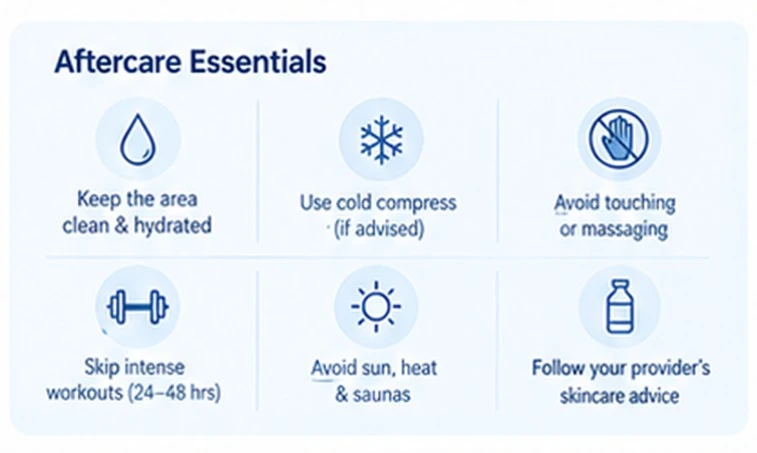
Aftercare reminders. Follow the specific instructions given by your treating clinician.
First 24 to 48 Hours
Keep the skin clean, and treat the area gently. Plastic surgeons commonly advise the following:
- Do: apply a cold compress or ice pack in the first 24 hours, wrapped in a cloth
- Do: sleep on your back if that suits the treated area
- Do: stay hydrated and get enough rest
- Don’t: rub, poke or massage the area, even if it feels itchy or swollen
- Don’t: do strenuous exercise for the first 24 hours
- Don’t: use saunas or other heat for 24 to 48 hours
- Don’t: drink alcohol for 24 to 48 hours, which can add to swelling and bruising
- Don’t: use skincare or makeup with active ingredients that may irritate the skin
First Week
Mild swelling is normal, and most people look close to normal by about three days, although filler can take up to three weeks to settle fully. Avoid unprotected sun exposure and treatments such as lasers, microneedling or microdermabrasion unless your provider says they are fine. Tell your provider if lumps or uneven areas remain.
Warning Signs That Need Medical Attention
Call your provider right away if you notice any of the following::
- Bleeding or pain
- Fever, or redness and swelling that spreads
- Hard areas that do not improve in a few days
- Difficulty breathing or other signs of an allergic reaction
Get immediate medical care for vision changes, skin that turns white, gray or blue, or signs of a stroke, such as sudden trouble speaking or weakness on one side of the body..
Dermal Filler Cost in Lahore, Pakistan
Cost is one of the most common questions. Prices vary by brand, amount of filler and clinic. Always ask for a written quote before treatment.
Because filler is a cosmetic procedure, expect to pay out of pocket.
Price per Syringe
Listings on Marham show dermal fillers price in Pakistan commonly between PKR 15,000 and PKR 40,000 per syringe in Lahore, while some pages quote PKR 15,000 to 25,000. Lip fillers price in Pakistan and the overall lip fillers cost follow the same logic, since brand and quantity decide the bill. Confirm current prices with your clinic.
Factors That Affect the Cost
Several things change the final price:
- Brand and filler type
- Amount of filler injected
- Area treated
- Clinic location
- Follow-up visits and touch-ups
Does Insurance Cover Dermal Fillers?
Health insurance generally does not cover fillers used purely for cosmetic reasons. Ask your clinic for the expected cost before treatment, including follow-ups. Compare quotes only between providers using genuine, approved products, because a very low price can be a warning sign.
How to Choose a Safe Dermal Filler Provider in Lahore
Provider choice is the biggest safety factor. The FDA advises choosing a licensed provider with dermatology or plastic surgery experience, and expects providers to understand injection-site anatomy and have a plan for blood vessel complications.
Pakistani dermatologists have documented filler complications in the Journal of Pakistan Association of Dermatologists, which shows why this matters.
Qualifications to Look For
Look for a qualified dermatologist or plastic surgeon with specific filler experience, and check their training, such as FCPS or an equivalent specialist qualification. Ask how many procedures they perform and whether they have managed complications before.
Fake and Unapproved Fillers: How to Protect Yourself
Fake filler and unapproved products may be counterfeit or not approved for use. The FDA says no dermal fillers are approved for over-the-counter use, advises against buying them online or injecting yourself, and warns that needle-free devices are not approved. Ask to see the product packaging and check that it looks genuine before treatment.
Questions to Ask Before Treatment
Bring a short list of questions to your consultation:
- Which filler and brand will you use, and why?
- Is the product sealed and genuine?
- What are the risks for this specific area?
- How do you manage complications, including blood-vessel problems?
- What aftercare and follow-up do you offer?
- What is the total cost, including touch-ups?
Ready to book? Contact us for a consultation.
Frequently Asked Questions
Do Dermal Fillers Hurt?
Most people feel a pinch or sting during injection. A numbing cream or a numbing agent in the filler reduces discomfort, and pain is usually mild. Tenderness and bruising can follow for a few days.
Are Dermal Fillers Safe?
Dermal fillers are generally safe when approved products are injected by a licensed, experienced provider. Risks still exist, including bruising, infection and, rarely, serious blood-vessel complications. A proper consultation helps you understand your own risk.
Are Dermal Fillers Permanent?
Most dermal fillers are temporary and last from about six months to a few years. Permanent fillers such as PMMA exist, but they are the exception. They are harder to correct, so they are generally not recommended as a first treatment.
How Soon Will I See Results?
Most fillers show results straight away, although swelling can hide the final look for several days. Poly-L-lactic acid builds up gradually over several sessions, so patience is needed with that type.
Can Dermal Fillers Be Reversed?
Hyaluronic acid fillers can be dissolved with hyaluronidase. Other types, such as calcium hydroxylapatite, poly-L-lactic acid and PMMA, cannot be dissolved this way and may be difficult to remove.
Conclusion
Dermal fillers can smooth lines, restore volume and refine features with little downtime, but results are temporary and carry real risks. The type of filler, the area treated and, above all, the skill of your provider decide how safe and natural the outcome looks.
Before booking, check qualifications, confirm the product is genuine, and ask for a clear price. Contact us to discuss your goals, explore our services, or read more in our blog.
References
1. U.S. Food and Drug Administration (FDA). Dermal Fillers (Soft Tissue Fillers). https://www.fda.gov/medical-devices/aesthetic-cosmetic-devices/dermal-fillers-soft-tissue-fillers. Accessed 16 October 2026.
2. Cleveland Clinic. Dermal Fillers: What They Are, Types, Benefits & Side Effects. https://my.clevelandclinic.org/health/treatments/22667-dermal-fillers. Accessed 16 October 2026.
3. Mayo Clinic. Facial fillers for wrinkles. https://www.mayoclinic.org/tests-procedures/facial-fillers/about/pac-20394072. Accessed 16 October 2026.
4. Mount Sinai. Injectable Fillers: JUVÉDERM, RADIESSE, Restylane, and Sculptra Aesthetic. https://mountsinai.org/care/ent/services/facial-plastic-reconstructive-surgery/injectable-fillers. Accessed 16 October 2026.
5. American Academy of Dermatology Association. Fillers: Overview. https://www.aad.org/public/cosmetic/wrinkles/fillers-overview. Accessed 16 October 2026.
6. American Society of Plastic Surgeons (ASPS). Dermal Fillers. https://www.plasticsurgery.org/cosmetic-procedures/dermal-fillers. Accessed 16 October 2026.
7. ASPS. Dermal Fillers Recovery. https://www.plasticsurgery.org/cosmetic-procedures/dermal-fillers/recovery. Accessed 16 October 2026.
8. ASPS. What not to do after getting facial filler. https://www.plasticsurgery.org/news/articles/what-not-to-do-after-getting-facial-filler. Accessed 16 October 2026.
9. ASPS. What can men expect during their dermal fillers recovery? https://www.plasticsurgery.org/news/blog/what-can-men-expect-during-their-dermal-fillers-recovery. Accessed 16 October 2026.
10. Cleveland Clinic. Botox (Botulinum Toxin): What It Is, Results & Side Effects. https://my.clevelandclinic.org/health/treatments/8312-botulinum-toxin-injections. Accessed 16 October 2026.
11. Journal of Cosmetic Dermatology (2025). How Should We Use Hyaluronidase for Dissolving Hyaluronic Acid Fillers? https://pubmed.ncbi.nlm.nih.gov/39811886/. Accessed 16 October 2026.
12. StatPearls (NCBI Bookshelf). Hyaluronidase. https://www.ncbi.nlm.nih.gov/sites/books/NBK545163/. Accessed 16 October 2026.
13. Marham. Dermal Fillers in Lahore (doctors and price listings). https://www.marham.pk/all-services/dermal-filler/lahore/area-fazlia-colony. Accessed 16 October 2026.
14. Journal of Pakistan Association of Dermatologists (2012;22:12-18). Complications of dermal fillers: an experience. https://www.jpad.com.pk/index.php/jpad/article/download/894/859/1780