

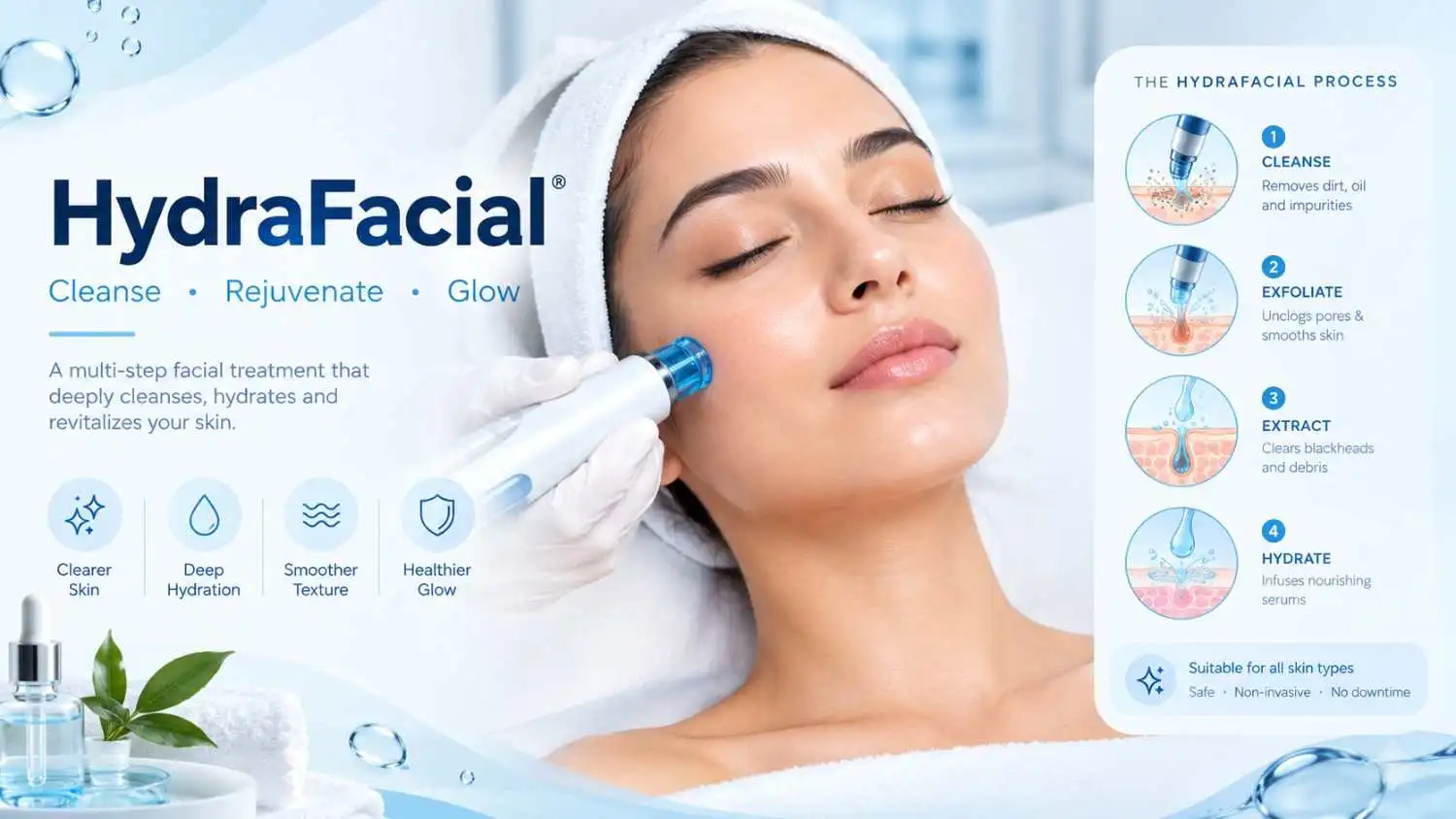
A HydraFacial is a non-invasive facial that cleanses, exfoliates, extracts, and hydrates the skin in one session, usually within 30 to 60 minutes. Most people can return to normal activities right away, but research on the treatment itself is still limited.
This guide explains how the treatment works, its possible benefits, side effects, and aftercare. It also covers cost in Pakistan, who should avoid it, and how to choose a trusted clinic in Lahore.
What Is a HydraFacial?
A HydraFacial is a patented skin treatment offered in medical spas and dermatology offices. It is sometimes called hydradermabrasion because it pairs microdermabrasion-like exfoliation with hydrating serums, according to Healthline.
Because the treatment is non-invasive, it usually needs no numbing and no recovery time. Results can vary between providers, as Medical News Today points out.
How a HydraFacial Differs From a Regular Facial
A regular facial often relies on manual extractions. A HydraFacial uses a handheld vortex device with gentle suction instead, and it delivers customized serums in the same session. Verywell Health notes that the suction strength can be adjusted for comfort.
Who Performs a HydraFacial?
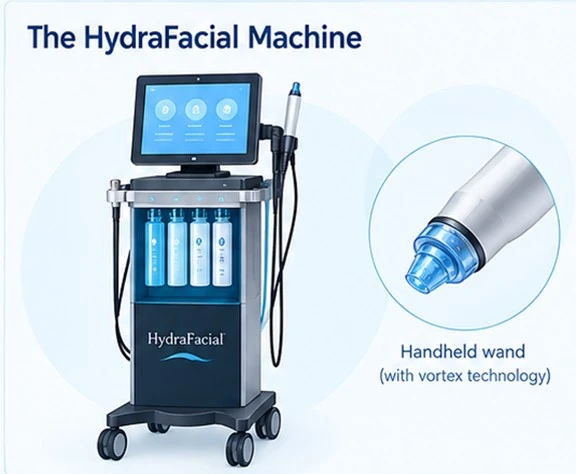
A licensed aesthetician or a dermatologist performs the treatment. They use a specialized hydrafacial machine, often the HydraFacial MD device made by Edge Systems, according to Everyday Health. Ask about the provider’s training and experience before you book.
How Does a HydraFacial Work?
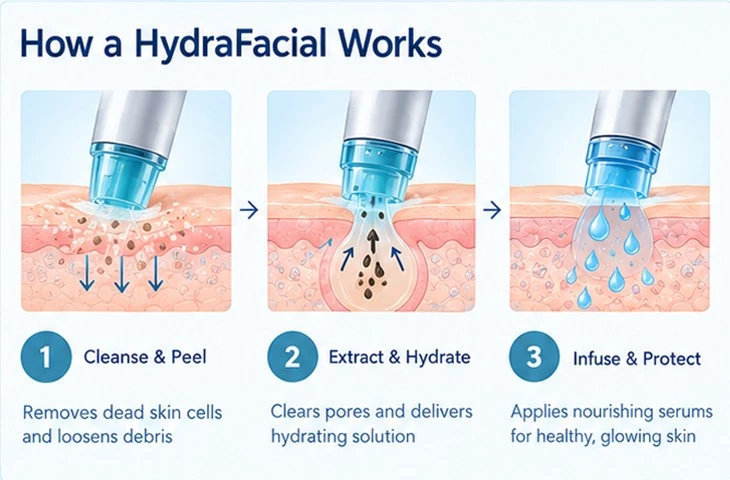
The treatment uses a handheld wand to work through three main steps: cleansing and peeling, extraction and hydration, and serum infusion. Each hydrafacial treatment can be adjusted to your skin concerns.
Step 1: Cleanse and Peel
The wand uses a vortex action to loosen dead skin cells and debris. A mild peel containing glycolic acid and salicylic acid helps resurface the skin. Some people feel a slight tingle, but it should not be painful.
Step 2: Extract and Hydrate
A vacuum-like attachment removes debris from clogged pores with gentle suction, while moisturizer is delivered at the same time. The strength of the suction can be adjusted for your comfort.
Step 3: Infuse and Protect
The session ends with antioxidant and collagen serums that support hydration and skin elasticity. Your provider may also add targeted boosters at this stage.
HydraFacial Boosters and Add-Ons
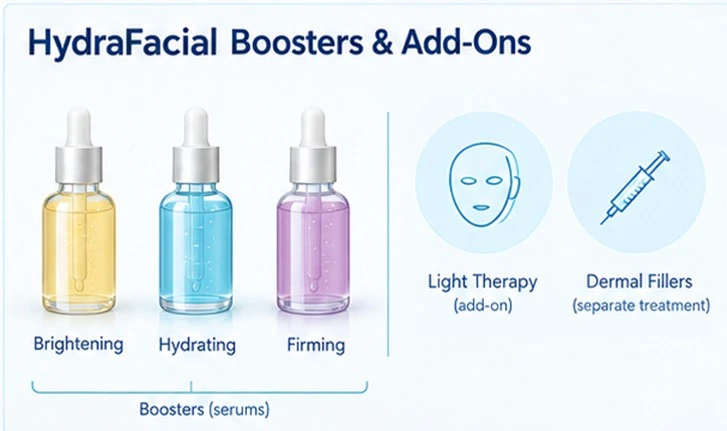
Boosters are serums chosen for goals such as calming, brightening, or firming the skin. Add-ons such as dermal fillers or light therapy are separate treatments and are not part of the HydraFacial, according to Healthline. Extras usually raise the price.
How Long Does a HydraFacial Take?
A session typically lasts 30 to 60 minutes, depending on the boosters or add-ons you choose. Healthline says each session takes less than an hour, and there is no downtime.
HydraFacial Benefits
The main hydrafacial benefits are a cleaner, smoother, and more hydrated look with no downtime. Deep exfoliation clears pores so serums can reach the skin better, which may improve texture, tone, and radiance.
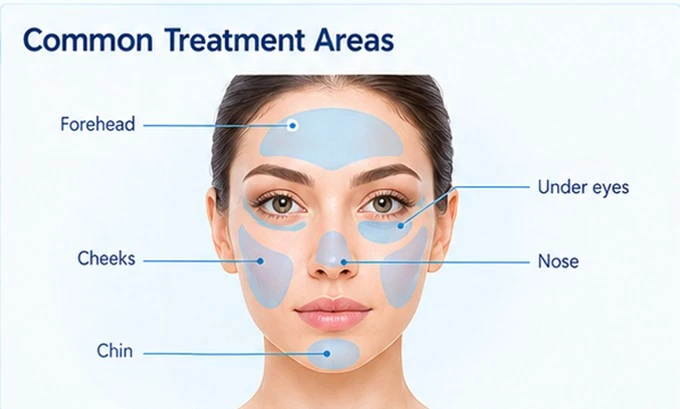
Research is limited, so the sections below explain the evidence for each concern.
HydraFacial for Acne
Healthline notes that clinical evidence for acne was lacking. A small 2022 study of 20 adults with mild to moderate acne tested treatments every two weeks for 12 weeks, as Medical News Today reports. Larger studies are still needed.
HydraFacial for Blackheads
Dead skin cells and sebum contribute to blackheads, and exfoliation with extraction may help. However, Healthline and Verywell Health both say no clinical studies have directly confirmed this for HydraFacial.
HydraFacial for Rosacea
Rosacea skin is sensitive, and the evidence is thin. Healthline says more research is needed, though a 2006 study suggested similar techniques may help papulopustular rosacea. Ask your dermatologist first, and avoid treatment during a flare.
HydraFacial for Anti-Aging
Healthline describes a small 2008 study of 20 women in which treated skin showed smaller pores, less hyperpigmentation, and fewer fine lines. Everyday Health describes a similar study as testing hydradermabrasion, not the HydraFacial, so the evidence is indirect.
HydraFacial for Sensitive Skin and All Skin Types
Verywell Health describes the treatment as suitable for all skin types and gentler than microdermabrasion. A small 2024 study reported by Medical News Today suggests benefits for Fitzpatrick skin types 2 to 5. Tell your provider about sensitive skin or allergies first.
Does a HydraFacial Really Work? Is It Worth It?
People usually notice a fresher, more hydrated look right after a session, but strong clinical proof is still missing. Medical News Today says studies are limited and results may vary between providers.
Whether it is worth it depends on your goals and budget. For concerns such as acne scars or deeper wrinkles, ask a dermatologist whether another treatment fits better.
HydraFacial Before and After: What Results to Expect
After a session, skin may look smoother, more radiant, and more even in tone. Healthline says results are noticeable immediately, but effects fade, so repeat sessions are usually needed to maintain them.
HydraFacial Side Effects and Precautions
Side effects are usually mild. You may feel light pressure from the wand, and Healthline says the treatment is not supposed to cause pain. Redness can still occur in some people.
Common Mild Side Effects
Verywell Health lists tightness, redness, skin sensitivity, and irritation, which usually settle within a day or two with home care. Contact your provider if symptoms last or get worse.
Can a HydraFacial Cause Breakouts?
Occasionally. Deep exfoliation can trigger skin purging, where oil and debris rise to the surface and cause temporary breakouts. Verywell Health calls this uncommon. If you are prone to breakouts, tell your provider beforehand.
Who Should Avoid a HydraFacial?
Skip or postpone the treatment if you have an active rash, open wounds, or sunburn. Healthline also advises against it during a rosacea flare.
Skin Conditions and Medications
Everyday Health also lists moderate to severe acne or rosacea, and Verywell Health adds skin irritated by topical ingredients. Some providers refuse treatment within six months of isotretinoin. Check with your provider if you take prescription medication.
HydraFacial During Pregnancy
Ask your doctor first. A 2017 review found glycolic acid peels relatively safe but advised using salicylic acid only on limited areas. According to Verywell Health, no study confirms that the exact peel used in a HydraFacial is safe during pregnancy.
How to Prepare for a HydraFacial
Tell your provider about sensitive skin, allergies, and every product you use. Everyday Health quotes an aesthetician who advises stopping prescription creams a few days before treatment to limit irritation, but follow your own provider’s instructions.
HydraFacial Aftercare
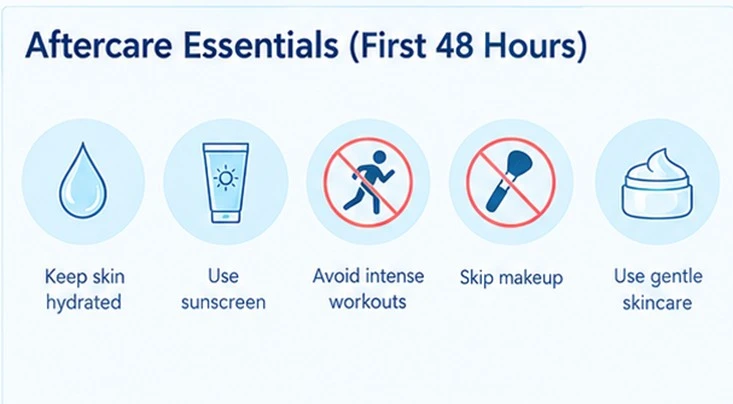
Most people resume normal activities right away. Avoid other exfoliating treatments for a couple of days, as Healthline advises. Verywell Health also recommends sunscreen with at least SPF 40, because skin can burn more easily after treatment.
How Often Should You Get a HydraFacial?
Healthline notes that advice ranges from every two to four weeks, while Verywell Health suggests monthly treatments for lines, pigmentation, and congested skin. Your aesthetician or dermatologist can set a schedule based on your skin type and goals.
How Long Do HydraFacial Results Last?
Verywell Health says results can last one to four weeks. They vary with skin type and lifestyle, so repeat sessions help maintain the glow.
HydraFacial vs Other Skin Treatments
Several treatments cleanse or exfoliate, but they work differently. The comparison table at the end of this section gives a quick overview.
HydraFacial vs Microdermabrasion
Microdermabrasion exfoliates with small crystals and does not use serums, according to Healthline. It suits fine lines, wrinkles, age spots, and acne scars, while a HydraFacial adds hydration and serum delivery.
HydraFacial vs Dermalinfusion (DiamondGlow)
Dermalinfusion uses similar technology and is also a three-in-one treatment that cleanses, exfoliates, and delivers serums. Unlike a HydraFacial, it may cause some redness and irritation afterward, Healthline says.
HydraFacial vs Radiofrequency Therapy
Radiofrequency (RF) therapy uses heat in deep skin tissue to boost collagen production and may help acne scars. It involves no exfoliation or serums and may cause redness, according to Healthline.
HydraFacial vs Traditional Facial
Traditional facials rely on manual extractions, while a HydraFacial uses vortex-powered suction. Verywell Health notes this difference, along with the shorter, no-downtime session of a HydraFacial.
Quick Comparison Table
| Treatment | Main method | Serums | Notes |
| HydraFacial | Vortex exfoliation, suction, serum infusion | Yes | Mild, short-lived redness possible |
| Microdermabrasion | Crystal exfoliation | No | Suited to fine lines, age spots, acne scars |
| Dermalinfusion | Exfoliation, extraction, serum infusion | Yes | May cause redness and irritation |
| Radiofrequency therapy | Heat energy in deep tissue | No | May cause redness; may help acne scars |
HydraFacial Cost and Insurance Coverage
Prices vary by country, clinic, and extras. Healthline puts the average US office price at $175 per session, and Verywell Health gives a range of $150 to $350. A cleveland list brochure lists $175 at one location.
For prices in Pakistan, see the Lahore section below.
Factors That Affect HydraFacial Cost
Cost depends on your location, the provider’s experience, and the boosters or add-ons you choose. Prepaid packages and membership discounts can lower the price per session, according to Verywell Health.
Is a HydraFacial Covered by Insurance?
Usually not. Healthline and Verywell Health both classify it as a cosmetic procedure, so insurance typically does not cover it. Ask your provider about packages or promotions.
HydraFacial in Lahore, Pakistan
Lahore has many clinics and dermatologists offering this treatment. When comparing HydraFacial Lahore clinics, look at provider qualifications, hygiene standards, and the treatment plan, not only the price.
[Add clinic name, doctor qualifications, address, and booking link here]
HydraFacial Price in Lahore
The HydraFacial price in Pakistan varies by city, clinic, and treatment type. Marham, a doctor-listing site, says costs range from Rs. 5,000 to Rs. 30,000 depending on the treatment center. Some clinics advertise entry prices from Rs. 3,000. Confirm the current price with your clinic.
How to Choose a HydraFacial Clinic in Lahore
The best HydraFacial in Lahore is one performed by a qualified dermatologist or trained aesthetician in a clean clinic. Ask which hydrafacial machine and boosters the clinic uses, who performs the session, and what the price includes. Check for PMDC verification.
HydraFacial FAQs
Is a HydraFacial painful?
Usually not. You may feel light pressure or a slight tingle from the wand and peel, but the treatment is not supposed to cause pain.
Is a HydraFacial safe for sensitive skin?
It is often described as gentle, but reactions can occur. Tell your provider about sensitive skin, rosacea, or allergies first.
Can I get a HydraFacial while pregnant?
Ask your doctor first. No study confirms that the peel used in a HydraFacial is safe during pregnancy.
How often should I get a HydraFacial?
Advice ranges from every two to four weeks. Your provider can set a schedule for your skin type.
Does a HydraFacial help with acne?
It may help some people, but the evidence is limited to small studies. Ask a dermatologist about acne treatment.
Is a HydraFacial covered by insurance?
Usually not, because it is considered a cosmetic procedure.
Conclusion
A HydraFacial can give a fresh, hydrated look with no downtime, but research is still limited and it does not suit everyone. Avoid it during a rash, sunburn, or rosacea flare, and ask your doctor first if you are pregnant.
Before booking, compare providers and confirm the price. To learn more about our hydrafacial treatment [ https://firstscarclinic.com/hydra-facial/ ], book a consultation [ https://firstscarclinic.com/contact-us/ ].
References
1. Healthline. “What Is a HydraFacial and How Does It Work?” Written by Kristeen Cherney; medically reviewed by Cynthia Cobb, DNP, APRN, WHNP-BC, FAANP; December 9, 2020. https://www.healthline.com/health/what-is-hydrafacial
2. Medical News Today. “HydraFacial: Procedure, effectiveness, risks, and more.” https://www.medicalnewstoday.com/articles/what-is-a-hydrafacial
3. Everyday Health. “What Is a Hydrafacial? How It Works, Benefits, Risks, and Where to Get One.” By Jessica Migala; medically reviewed by Susan Bard, MD; updated October 28, 2023. https://www.everydayhealth.com/skin-beauty/what-is-a-hydrafacial-how-it-works-benefits-risks-and-where-to-get-one/
4. Verywell Health. “What Is a Hydrafacial and How Does It Work?” By Anna Giorgi; medically reviewed by Susan Bard, MD; updated May 20, 2026. https://www.verywellhealth.com/what-is-a-hydrafacial-8420498
5. Cleveland Clinic. “Aesthetics brochure” (PDF). https://my.clevelandclinic.org/-/scassets/files/org/cosmetics/aesthetics-brochure.pdf?la=ar 6. Marham. “Best Doctors For Hydrafacial In Gulshan E Jamal, Karachi” (HydraFacial cost listing). https://www.marham.pk/all-services/hydrafacial/karachi/area-gulshan-e-jamal