

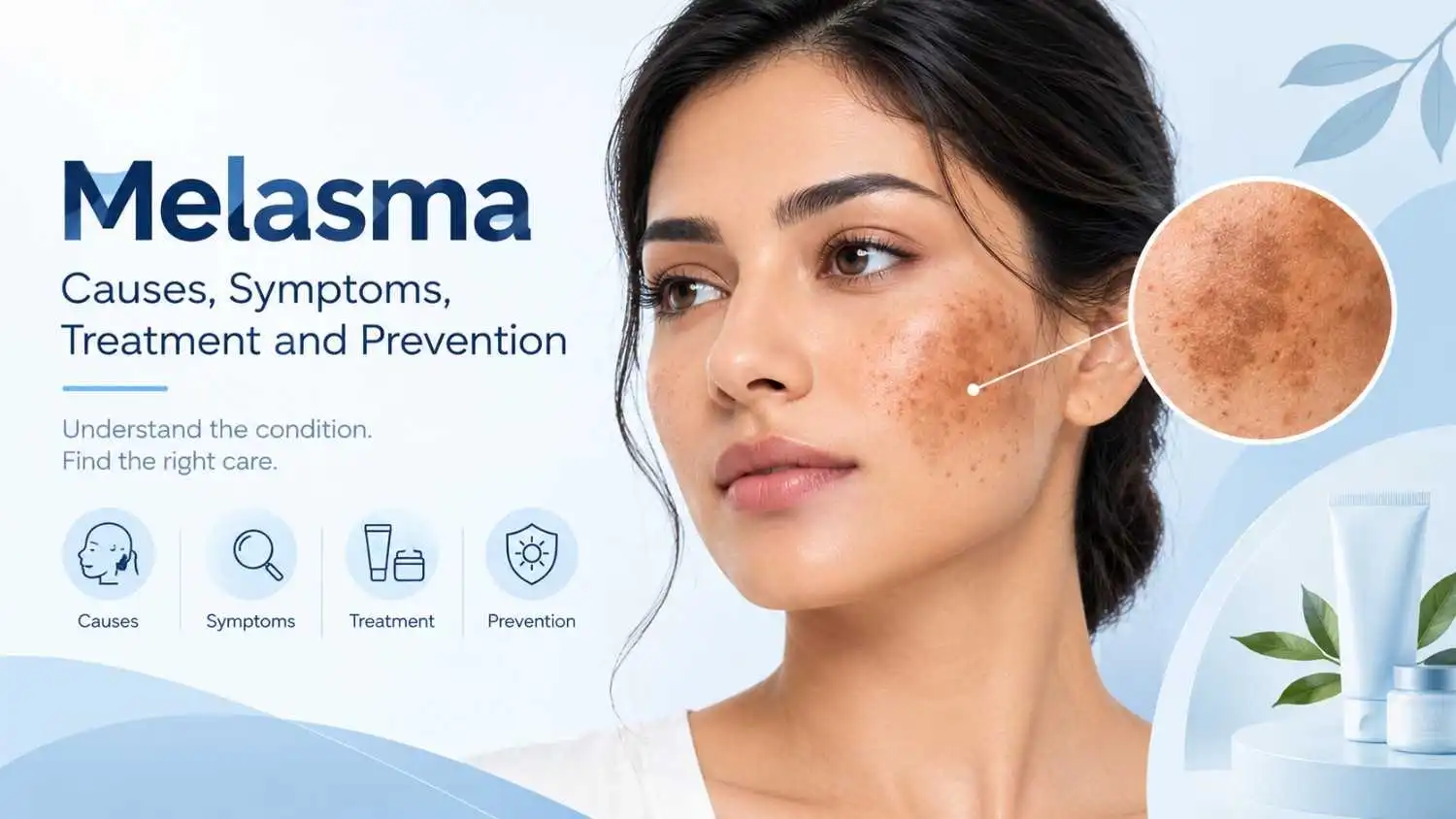
Melasma is a common skin condition that causes brown or gray-brown patches, usually on the face. It is harmless and painless, but it can be stubborn and may affect confidence. This guide explains what melasma is, why it happens and which treatments dermatologists use to manage it.
Sun protection, a correct diagnosis and a dermatologist-guided plan matter most. For readers in Pakistan, where sun exposure is a daily reality, we also cover creams and prescriptions. Treatment can lighten patches, but relapse is common, so long-term care is part of the plan.
What Is Melasma?
Melasma is an acquired form of hyperpigmentation. The pigment-producing cells, called melanocytes, make too much melanin, which creates symmetrical brown, gray-brown or blue-gray patches. It usually begins between ages 20 and 40 and is most common on the face.
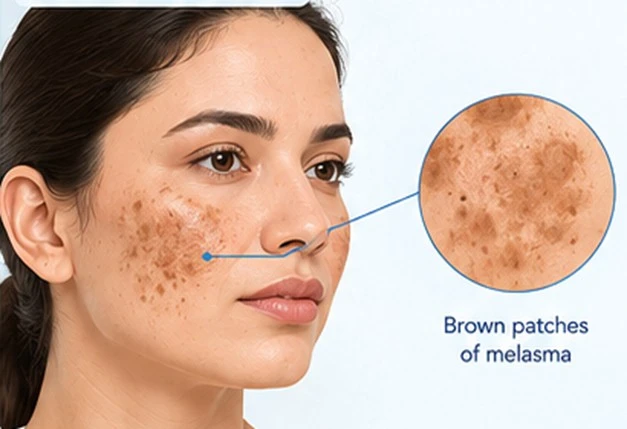
Figure: Example of visible melasma patches; appearance varies by person.
Melasma vs Chloasma: Which Term Is Preferred?
Chloasma is an older name, taken from a Greek word meaning “to become green.” Because the pigment is never green, dermatologists prefer melasma, from the Greek for dark. Some sources still use chloasma for melasma that appears during pregnancy.
Why Is Melasma Called the “Mask of Pregnancy”?
Rising estrogen and progesterone during pregnancy can trigger patches on the cheeks, forehead and upper lip. Roughly 15% to 50% of pregnant women develop melasma, which is why it is also called the pregnancy mask. The patches often fade after delivery, though not always.
Is Melasma Harmful, Painful or Cancerous?
Melasma is not harmful, painful or itchy, and it does not turn into cancer. However, some skin cancers and other conditions can look similar. A first-time or changing patch should be checked by a dermatologist to confirm the diagnosis.
What Does Melasma Look Like? Symptoms and Types
The main sign is flat, darker patches that usually appear on both sides of the face in a roughly symmetrical pattern. The pattern and depth of the pigment help guide treatment.
Common Signs and Symptoms
Patches are light brown, dark brown or blue-gray, and may look like large freckle-like spots with irregular borders. They are flat and cause no pain. Melasma tends to darken in summer, lighten in winter and develops gradually over weeks or months.
Where Melasma Appears on the Skin
Melasma most often follows skin that is exposed to sunlight. Dermatologists describe facial and extrafacial patterns, depending on where the patches sit.
Facial Patterns
Melasma on face is usually centrofacial, affecting the forehead, cheeks, nose and upper lip. Other patterns include malar (cheeks and nose), lateral cheek and mandibular (jawline). The centrofacial pattern is the most common.
Extrafacial Patterns
Less often, melasma appears on the forearms, upper arms, shoulders and neck. Neck involvement is reported mainly in people aged 50 or older. These patches follow the same sun-exposed distribution as facial melasma.
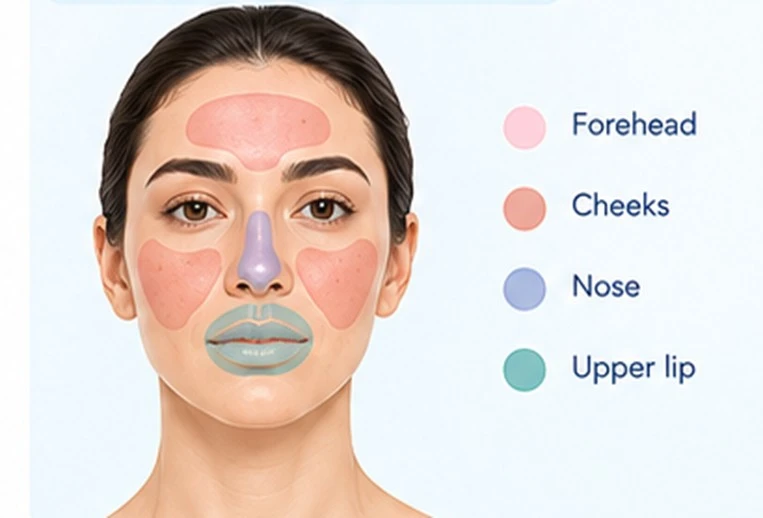
Figure: Common facial areas where melasma patches may appear.
Epidermal, Dermal and Mixed Melasma
Melasma types depend on how deep the excess pigment sits. A Wood’s lamp or dermatoscope helps identify the type, which affects how well treatment is likely to work.
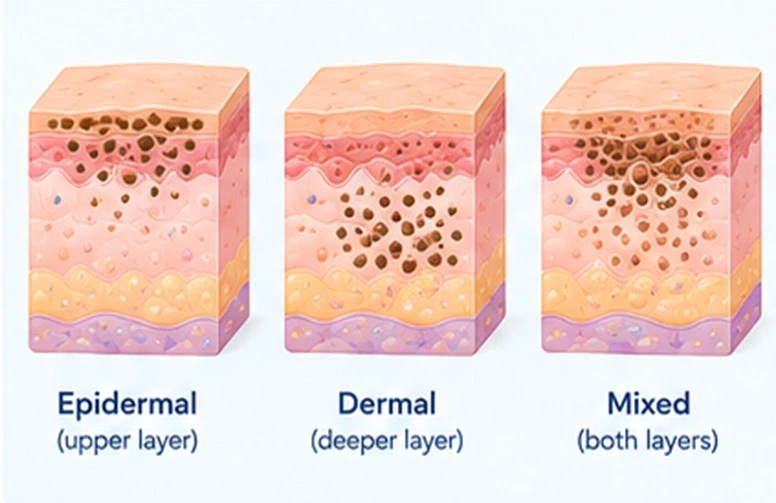
Figure: Simplified comparison of epidermal, dermal and mixed melasma.
Epidermal Melasma
Epidermal melasma is dark brown with well-defined borders and looks more obvious under a Wood’s lamp. The pigment sits in the upper skin layer, and it usually responds better to treatment.
Dermal Melasma
Dermal melasma is light brown to blue-gray with blurry borders, and it does not stand out under a Wood’s lamp. The pigment sits deeper in the dermis, so it usually responds poorly to treatment.
Mixed Melasma
Mixed melasma combines brown and blue-gray tones and is the most common type. It shows a mixed pattern under a Wood’s lamp and usually shows partial improvement with treatment.
Who Gets Melasma? Prevalence and Risk Factors
Melasma can affect anyone, but women, people with darker skin tones and people with strong sun exposure are affected most.
How Common Is Melasma?
Estimates vary widely by population, from about 1.5% to 33% in general groups and higher in high-risk groups such as people with darker skin. Among pregnant women, roughly 15% to 50% are affected.
Age, Sex and Pregnancy
Women make up roughly 90% of cases, according to the American Academy of Dermatology. Melasma typically starts during the reproductive years, between ages 20 and 40, and rarely occurs during puberty. Pregnancy, hormonal contraception and hormone therapy raise the risk.
Skin Tone and Fitzpatrick Skin Phototypes
Melasma is most common in people with light-brown to brown skin who tan easily, usually Fitzpatrick skin phototypes III and IV. It is less common in very fair skin (types I and II) and in very dark skin (types V and VI).
Melasma in Men
About 10% of cases occur in men, according to the American Academy of Dermatology. Sun exposure and family history are among the factors linked to melasma in everyone. Men with melasma benefit from the same daily sun protection and dermatologist care.
What Causes Melasma?
Understanding melasma causes helps you avoid triggers. Medscape’s clinical overview describes the process as multifactorial, and DermNet calls it a photoaging disorder in genetically predisposed people, driven mainly by light and hormones.
What Happens in the Skin?
Melanocytes in the epidermis make melanin, and light, heat or hormones can push them to make more. Melasma skin shows overactive melanocytes, with pigment in the upper layer (epidermal), in the dermis within melanophages (dermal), or both.
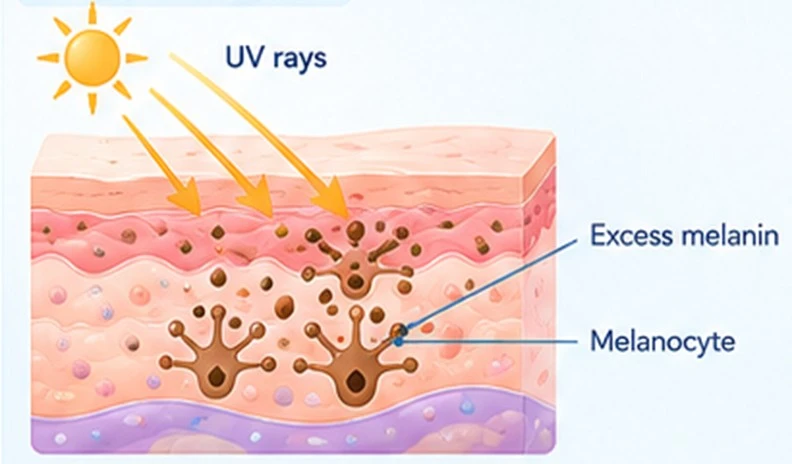
Figure: UV exposure can stimulate pigment production in melasma-prone skin.
Sun Exposure: UV and Visible Light
Ultraviolet and visible light stimulate melanin production, and infrared heat may also play a role. This is why melasma often worsens in summer. Tanning beds expose skin to UV light as well and can worsen patches.
Can Light Through Windows Trigger Melasma?
Yes, it may. Visible light passes through glass, so flare-ups can follow driving or sitting by a window. Harvard Health notes that tinted sunscreens with iron oxide help because they block visible light as well as UVA and UVB.
Hormones: Pregnancy, Birth Control and HRT
Estrogen and progesterone are strongly linked to melasma. Pregnancy, oral contraceptive pills, hormone replacement therapy and some implants are associated with cases. Evidence on intrauterine devices is mixed, so talk to your doctor before changing contraception.
Genetics and Family History
Family history is common. Studies report that between about one-third and 60% of people with melasma have an affected relative, and most identical twins share it. Genetics cannot be changed, which is one reason complete prevention is difficult.
Thyroid Disorders
Research has found an association between melasma and thyroid disorders, including an underactive thyroid. Association does not prove that one causes the other. Your dermatologist or doctor may check your thyroid.
Medications and Phototoxic Reactions
Some drugs make skin more sensitive to light, causing phototoxic reactions that can trigger or worsen melasma. Examples include certain antibiotics, NSAIDs, diuretics, antipsychotics and targeted cancer therapies. Antiseizure medicines have also been linked. Never stop a prescribed medicine without medical advice.
Skin Care Products, Cosmetics and Scented Soaps
Irritating cosmetics, perfumed soaps and toiletries may cause phototoxic reactions or inflammation that can worsen melasma. Waxing and harsh scrubs may also aggravate patches. If your skin reacts easily, choose gentle, fragrance-free products.
Other Possible Triggers
The American Academy of Dermatology notes that stress may trigger melasma. One source also suggests LED screen light, but the evidence is limited, so treat it as unproven. No food or drink is known to cause or cure melasma.
Melasma vs Other Skin Conditions
Several pigment conditions look alike, which is why an accurate diagnosis matters before you start any cream.
Melasma vs Freckles, Age Spots and Sun Spots
Freckles are small and distinct, while melasma patches are usually larger and more symmetrical. Age spots (solar lentigines, also called sun or liver spots) can look similar. Only a dermatologist can reliably tell them apart.
Other Conditions Mistaken for Melasma
Conditions sometimes confused with melasma include post-inflammatory hyperpigmentation, drug-induced pigmentation, nevus of Ota, nevus of Hori and lichen planus. A skin biopsy can help when the diagnosis is unclear.
How Is Melasma Diagnosed?
Diagnosis is usually clinical, based on how the skin looks and where the patches appear.
Clinical Examination
A dermatologist examines your face and neck and asks when the patches began. They may also ask about family history, pregnancy, medicines, soaps and cosmetics, because these answers help identify triggers.
Wood’s Lamp and Dermatoscope
A Wood’s lamp (black light) or dermatoscope shows how deep the pigment sits: epidermal, dermal or mixed. This helps predict how well treatment may work and which therapy to choose.
When Is a Skin Biopsy Needed?
A biopsy removes a small piece of skin when the diagnosis is uncertain. Under the microscope, melasma shows branched melanocytes, melanin in keratinocytes and melanophages, and sun damage called solar elastosis. It is quick and done during an office visit.
Measuring Severity With MASI
The Melasma Area and Severity Index (MASI) scores the area, darkness and uniformity of patches. Dermatologists use it, along with photographs, to track response to treatment. Some also ask how melasma affects your daily life.
Can Melasma Be Cured or Go Away on Its Own?
Melasma is hard to treat and has no definitive cure, but many people improve with consistent care. Some cases fade without treatment.
Is There a Cure for Melasma?
No treatment makes melasma disappear for good. Most options lighten patches partially, and relapse is common. Dermal pigment is especially stubborn. Realistic goals and long-term sun protection matter more than chasing a quick fix.
Can Melasma Go Away on Its Own?
Yes, it may. Melasma often fades when a trigger such as pregnancy or a medication ends. It is less likely to fade while hormonal triggers continue, and it can return, so keep protecting your skin.
Goals of Melasma Treatment
The goals are to reduce pigment production and even out skin tone. The best treatment for melasma on face is usually a combination: strict sun protection, a prescribed cream and sometimes a procedure. Your dermatologist tailors melasma treatment to your skin tone, pigment depth and triggers.
Sun Protection for Melasma
Strict sun protection is the foundation of any melasma plan. Without it, even effective treatments are likely to fail.
Choosing a Sunscreen for Melasma
Choose a broad-spectrum sunscreen that also blocks visible light. Apply it every morning and reapply through the day, including on cloudy days and when you sit near windows.
Iron Oxide and Tinted Sunscreens
Tinted sunscreens containing iron oxide block visible light, which clear sunscreens do not. Harvard Health reports that they can lower pigment production in melasma. The tint can also soften the look of patches.
Zinc Oxide and Titanium Dioxide
Dermatologists often recommend sunscreens with zinc oxide, titanium dioxide or iron oxide. These mineral filters sit on the skin and reflect light. If a white cast bothers you, choose a tinted version.
SPF Level and Reapplication
The American Academy of Dermatology recommends broad-spectrum SPF 30 or higher, while DermNet suggests SPF 50+ with iron oxides. Reapply about every two hours outdoors. Consistent reapplication matters as much as the number on the bottle.
Hats, Shade and Sun-Smart Habits
Wear a wide-brimmed hat, seek shade and limit time outdoors during peak hours, roughly 10 a.m. to 4 p.m. Protective clothing helps cover the arms and neck. Avoid tanning beds completely.
Topical Treatments for Melasma
A prescribed melasma cream is usually the first medical step after sun protection. Most options are tyrosinase inhibitors or skin lighteners that reduce pigment production.
Choosing an anti melasma cream depends on pigment depth, skin type, pregnancy status and how well your skin tolerates it. Combination therapy is common, and results take months, so ask your dermatologist to guide selection.
Hydroquinone
Hydroquinone is a long-standing first-line skin lightener, applied to the patches at night. It should be used for limited periods because prolonged use can cause side effects. Harvard Health suggests up to six months initially, then occasional use.
Triple Combination Cream
This melasma cream combines hydroquinone, tretinoin and a mild corticosteroid. Several sources describe it as the most effective option, and DermNet reports that it clears or improves 60% to 80% of patients. It needs medical supervision because irritation can occur.
Tretinoin and Topical Corticosteroids
Tretinoin, a topical retinoid, increases skin cell turnover and helps lighten pigment. A mild steroid reduces inflammation caused by other agents. Tretinoin can cause dermatitis and should not be used during pregnancy.
Azelaic Acid, Kojic Acid and Cysteamine
Azelaic acid is applied twice daily and is considered safe in pregnancy, though it can sting. Kojic acid and cysteamine are other lightening options. A small study of 50 people found cysteamine cream more effective than placebo.
Niacinamide, Vitamin C and Other Lightening Ingredients
Niacinamide, vitamin C and alpha arbutin appear in many brightening products and are generally gentler. Evidence is stronger for prescription combinations, so treat these as support rather than a replacement. Ask which products suit your skin.
Emerging and Experimental Agents
Researchers are studying thiamidol, glutathione, licorice extract, mequinol, resveratrol, zinc sulfate and 2-MNG, which showed promise in early trials. Many remain experimental, so popularity alone does not prove that an ingredient works.
Oral Treatment for Melasma
Oral medication is usually reserved for stubborn or more severe melasma, when creams and sun protection are not enough.
How Oral Tranexamic Acid Works
Tranexamic acid may reduce pigment production and excess blood vessels in the skin. The American Academy of Dermatology notes that studies show it can reduce patches when other treatments fail. It is usually combined with sunscreen and triple combination cream.
Who May Be Considered and Safety Cautions
Dermatologists review your health before prescribing it. Tell them if you have ever had a blood clot. Tranexamic acid should be taken only under medical supervision and never self-prescribed.
Procedures for Melasma
Procedures are add-ons when medication and sun protection fall short. They should be done by experienced specialists, because some can worsen melasma.
Chemical Peels
Peels using glycolic acid or salicylic acid remove the pigmented surface layer. The effect is temporary because deeper cells keep producing pigment. Skin is often pretreated with a tyrosinase inhibitor such as hydroquinone to lower the risk of post-inflammatory hyperpigmentation.
Laser and Light-Based Treatments
Q-switched, fractionated and picosecond lasers and intense pulsed light can lighten patches. They carry a real risk of relapse and of making melasma more resistant. Some studies suggest they help when combined with medication and sun protection, but expert use is essential.
Microneedling
Microneedling creates tiny controlled injuries, and as the skin heals, tone may become more even. Dermatologists use it as an add-on to topical therapy, not a standalone cure. DermNet also warns of a relapse risk.
Platelet-Rich Plasma
This procedure takes a small sample of your blood, separates the plasma and injects it into the affected skin. The American Academy of Dermatology lists it among add-on options. Only a board-certified dermatologist should perform it.
Melasma Treatment During Pregnancy
Melasma that starts in pregnancy often fades after delivery, so treatment may be delayed. Sun protection is safe and remains the priority.
Options Considered Safer in Pregnancy
Azelaic acid is the main topical considered safe in pregnancy, according to Cleveland Clinic and Harvard Health. Mineral sunscreen, hats and shade are standard. Check every product with your doctor first.
Treatments to Avoid
Harvard Health advises pregnant women to avoid most lightening agents except azelaic acid, and tretinoin should not be used. Do not start hydroquinone or tranexamic acid without medical approval. Ask about breastfeeding too.
Side Effects and Risks of Melasma Treatments
Every melasma treatment has trade-offs, so supervision by a dermatologist helps you reach your goals with fewer problems.
Side Effects of Topical Treatments
Hydroquinone and tretinoin can cause dermatitis, with redness, dryness and irritation, and azelaic acid may sting. Treatment can also darken skin through inflammation or lighten it too much. Report reactions to your dermatologist.
Risks of Procedures
Chemical peels and lasers can cause post-procedure hyperpigmentation, hypertrophic scars or worsening of melasma. Relapse is common. Choose a specialist who has experience treating melasma.
How Long Does Melasma Treatment Take, and What Does It Cost?
Melasma responds slowly, so planning for time and cost helps you stay consistent.
How Long Do Results Take?
The American Academy of Dermatology says results usually take 3 to 12 months, and longer if melasma is long-standing. Dermal pigment tends to be slower than epidermal pigment. A steady routine matters more than speed.
Cost and Insurance Coverage
In the US, melasma treatment is not considered medically necessary, so most insurers do not cover it. Costs depend on creams, visits and procedures. Ask your dermatologist for an estimate before you start.
Makeup and Camouflage for Melasma
Makeup can cover melasma while treatment takes effect. Choose products with sunscreen or iron oxide and avoid anything that irritates your skin. A dermatologist can show you techniques for a natural look.
Apply products in the right order: melasma medication first, then sunscreen, then camouflage makeup. Remove makeup gently at night so your skin is not irritated.
Is Melasma Permanent? Outlook, Relapse and Maintenance
Melasma is typically a chronic disorder, meaning it lasts three months or more. Some people have it briefly, while others live with it for years.
Melasma After Pregnancy
Pregnancy-related melasma often fades within about three months after delivery, according to Cleveland Clinic. If it does not, ask a dermatologist about treatment options. Fading is less likely while hormonal triggers continue.
Melasma After Stopping Birth Control
If hormonal contraception triggered melasma, patches may fade over three months or more after stopping. Do not stop contraception without medical advice. Discuss alternatives with your doctor.
Why Melasma Comes Back
Sun, heat and hormones can reactivate melanocytes even after good results, so pigment may reappear in summer. Relapse is especially noted after laser treatment. Setting realistic expectations about chronicity helps.
Maintenance Therapy
After improvement, continue strict sun protection and maintenance therapy. Harvard Health says non-hydroquinone lighteners can be combined with retinoids, with hydroquinone used intermittently if needed. Regular follow-ups let your dermatologist adjust the plan.
How to Prevent Melasma
Melasma cannot be fully prevented, especially with genetic or hormonal risk, but you can reduce flare-ups and recurrence.
Daily Sun Protection Routine
Apply tinted broad-spectrum sunscreen every morning, reapply through the day and wear a wide-brimmed hat. Avoid peak sun hours and tanning beds. Consistency is what prevents flare-ups.
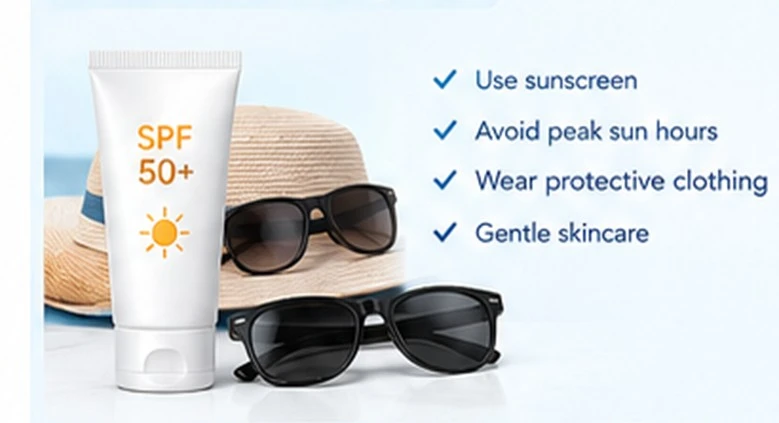
Figure: Daily sun protection habits that help reduce melasma flare-ups.
Hormone-Related Prevention
Discuss hormone-related triggers with your doctor, including birth control and hormone therapy. Do not change prescribed hormones on your own. If you are planning a pregnancy, ask about a sun-protection plan in advance.
Avoiding Skin Irritants
Choose gentle products, avoid harsh peels and abrasive scrubs, and avoid waxing on affected areas. Patch-test new products first. Irritation can worsen melasma skin.
Diet and Vitamin D: What Do We Know?
No food is known to cause or cure melasma. Cleveland Clinic suggests a balanced diet with enough vitamin D for general skin health, but this is not a treatment. Check with your doctor before taking supplements.
When to See a Dermatologist
See a dermatologist early. The worse melasma gets, the harder treatment becomes.
Signs You Should Book an Appointment
Book a visit if patches are new, change in color or shape, or feel raised, itchy or painful, since melasma is flat and painless. Also go if you are unsure whether the patches are melasma or another skin condition.
Questions to Ask Your Dermatologist
Bring a short list so you get the most from your visit:
- Do I have melasma or another skin condition?
- Which sunscreen do you recommend?
- Could my medicines, soaps or cosmetics be contributing?
- Which contraception options suit me?
- What are the risks, timeline and cost of treatment?
Finding a Qualified Dermatologist
Choose a qualified dermatologist with experience treating melasma, especially for peels, lasers and microneedling. In the US, the American Academy of Dermatology’s Find a Dermatologist tool can filter by skin-of-color focus. To book with us, visit our Services page or Contact Us.
Living With Melasma
Melasma is physically harmless, but living with visible patches can be hard. Support and a clear plan make it more manageable.
Emotional Impact and Quality of Life
Studies cited by Harvard Health link melasma with psychological distress and poorer quality of life because of its visibility. Tell your dermatologist how it affects you, since this can shape treatment goals.
Coping and Self-Care
Daily sunscreen, tinted products, camouflage makeup and following your treatment plan all help. Remember that melasma is common and manageable. Talk to someone you trust if it affects your mood.
Melasma FAQs
Does Sunscreen Really Help Melasma?
Yes. Sun and visible light darken patches, so a tinted sunscreen with iron oxide helps prevent worsening and relapse. It is not a cure on its own, but treatment is unlikely to succeed without it.
Is Makeup Safe to Use With Melasma?
Generally yes. Choose non-irritating products, ideally with sunscreen, and apply them after medication and sunscreen. Stop any product that causes redness or stinging.
Can Melasma Appear Overnight?
No. Melasma develops gradually over weeks to months. A sudden dark patch should be checked by a doctor.
Can Melasma Be Raised on the Skin?
Melasma is usually flat. A raised, itchy, painful or changing spot may be another condition, so see a dermatologist for a proper diagnosis.
Is Melasma Linked to Thyroid Disease?
Research shows an association, but it does not mean one causes the other. Your doctor may check your thyroid. Do not assume you have thyroid disease from melasma alone.
Can I Buy Hydroquinone Without a Prescription?
Rules vary by country. In the US, the American Academy of Dermatology says hydroquinone is no longer sold over the counter. Rules in Pakistan may differ, so ask a dermatologist or pharmacist. There is no single best cream for melasma in Pakistan. The right melasma cream in Pakistan depends on your pigment depth, skin type and pregnancy status, so avoid self-prescribing lightening products.
Conclusion
Melasma is a common, harmless pigment condition driven mainly by sunlight, hormones and genetics. It rarely disappears completely, but daily sun protection, an accurate diagnosis and a dermatologist-guided plan can lighten patches and reduce relapse.
If melasma is bothering you, start with strict sun protection and see a qualified dermatologist. You can contact us to book a consultation, or read more skin guides on our blog.
References
- Cleveland Clinic. Melasma. Last updated 07/27/2020. https://my.clevelandclinic.org/health/diseases/21454-melasma
- DermNet. Melasma. Oakley A; updated by Doolan BJ and Gupta M; minor update December 2025. https://dermnetnz.org/topics/melasma
- Medical News Today. What to know about melasma. Written by Jenna Fletcher; medically reviewed by Megan Slomka; updated February 28, 2025. https://www.medicalnewstoday.com/articles/323715
- Harvard Health Publishing. Melasma: What are the best treatments? Garibyan L, Moradi Tuchayi S. July 11, 2022. https://www.health.harvard.edu/blog/melasma-what-are-the-best-treatments-202207112776
- American Academy of Dermatology Association. Melasma: Diagnosis and treatment. Last updated 2/15/22. https://www.aad.org/public/diseases/a-z/melasma-treatment
- Medscape. Melasma. Lyford WH; updated January 5, 2026. https://emedicine.medscape.com/article/1068640-overview
- Pinnacle Dermatology. Melasma. https://pinnacleskin.com/conditions/melasma