

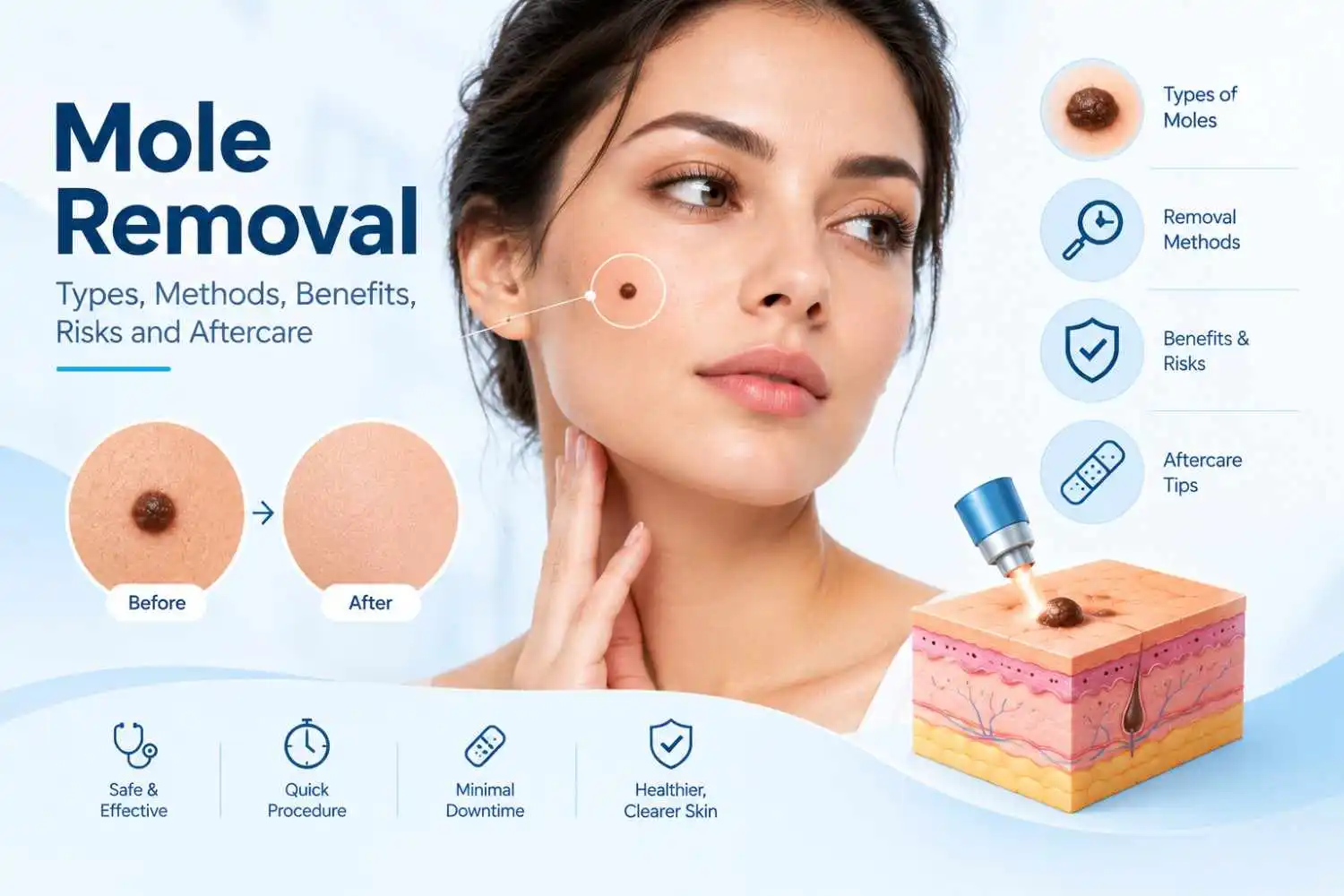
Mole removal is usually a quick, in-office procedure in which a dermatologist shaves or cuts a mole off the skin. Most moles are harmless, but a doctor may recommend removal if a mole looks suspicious, and some people choose it for cosmetic reasons.
This guide explains how dermatologists remove moles, what recovery involves, and when to get a mole checked. It also covers the face, laser options, and why a mole removal cream is not a safe shortcut.
What Is Mole Removal?
In this procedure, a dermatologist removes a mole by shaving or cutting it from the skin, usually under numbing medicine. It is typically an outpatient procedure, and the removed tissue can be tested for skin cancer.
What Is a Mole?
A mole, also called a nevus, is a common skin growth made of pigment cells. Moles range from skin-toned to pink, brown, or black, and they can be flat or raised. Most adults have about 10 to 40 moles, according to the American Academy of Dermatology.
Common Types of Moles
Dermatology clinics often describe three types. A junctional nevus is flat. A compound nevus is raised and has deeper roots. An intradermal nevus also has deeper roots and is often present for many years. Your dermatologist can confirm which type you have.
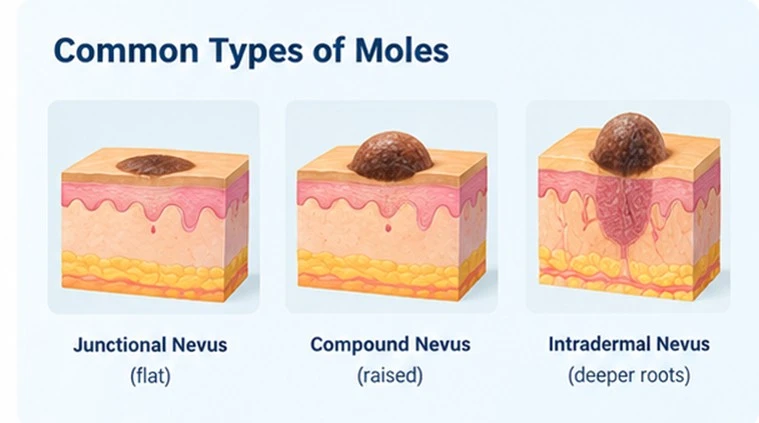
Diagram: Common mole types and their relative depth in the skin.
What Is an Atypical (Dysplastic) Mole?
An atypical mole looks unusual but is not always melanoma. Typical moles are round, even in color, and stay the same over time. If a flat atypical mole has not changed, a dermatologist may suggest watching it. A concerning one may need a biopsy.
Why Do People Get Moles Removed?
People usually choose mole removal for a medical or a cosmetic reason. The reason affects the method, the testing, and the follow-up care.
Medical Reasons: Diagnosis and Treatment
A dermatologist may recommend removal so the mole can be tested for cancerous or precancerous cells. If the mole is removed with good margins, the procedure can also treat skin cancer that has not spread. Early testing lets any further treatment start sooner.
Cosmetic and Comfort Reasons
Some people dislike how a mole looks, or it rubs against clothing or gets irritated by shaving. Cosmetic mole removal can help, but a dermatologist should examine the mole first. For mole removal on face skin, scars are easier to see, so discuss the method and aftercare beforehand.
When a Mole Does Not Need Removal
Most moles are harmless and need no treatment. If a mole is not changing and does not bother you, leaving it alone is reasonable. Keep checking it, and see a dermatologist if its color, size, or shape changes.
How to Tell If a Mole May Be Cancerous
Only a dermatologist can confirm whether a mole is cancerous. You can still watch for warning signs at home and bring any change to your doctor’s attention.
The ABCDE Rule
The ABCDE rule lists the main warning signs to watch for:
- Asymmetry: the two halves do not match
- Border: edges are irregular
- Color: the color is not uniform
- Diameter: larger than a pencil eraser (about 6 mm)
- Evolving: the mole changes in size, shape, or color
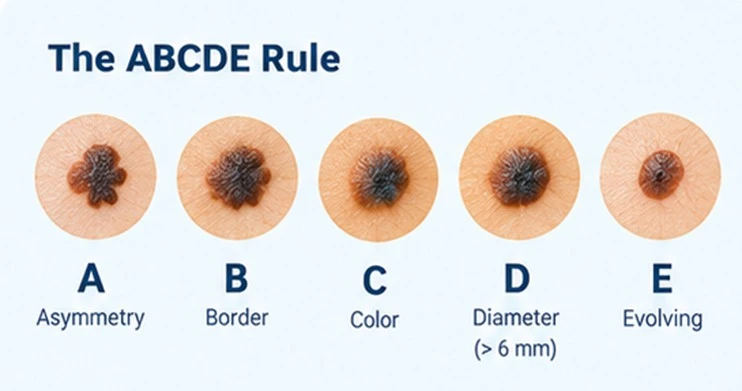
The ABCDE rule is a guide to warning signs—not a diagnosis. Have changing or suspicious moles examined by a dermatologist.
Other Warning Signs: Itching, Pain, Bleeding, and Discharge
Contact your doctor if a mole is itchy, painful, bleeds, or has discharge. Also report moles with irregular sides and any new mole that appears after age 30. A single change is reason enough to book a check.
Annual Skin Cancer Screening
Healthline notes that an annual skin cancer screening with a dermatologist is the best way to find out whether a mole is cancerous. People with a history of skin cancer may need screening more often.
Mole Removal Procedure: What to Expect
A typical visit is short and takes place in the clinic. The steps below show what usually happens.
Before the Procedure
The dermatologist inspects your skin and may photograph your moles to compare later. They may also use a dermoscope to see the mole closely and choose the best method. The area is then marked, cleaned, and numbed.
Anesthesia: Does Mole Removal Hurt?
The area is numbed with a topical anesthetic, an injection such as lidocaine, or both, so you should not feel pain during the procedure. Afterwards, you may feel stinging or burning for a few days.
How Long Does Mole Removal Take?
A small mole can take only a few minutes to remove, while larger or more complex moles take longer. The time depends on the method and the mole’s location. Your dermatologist can give you a realistic estimate before you start.
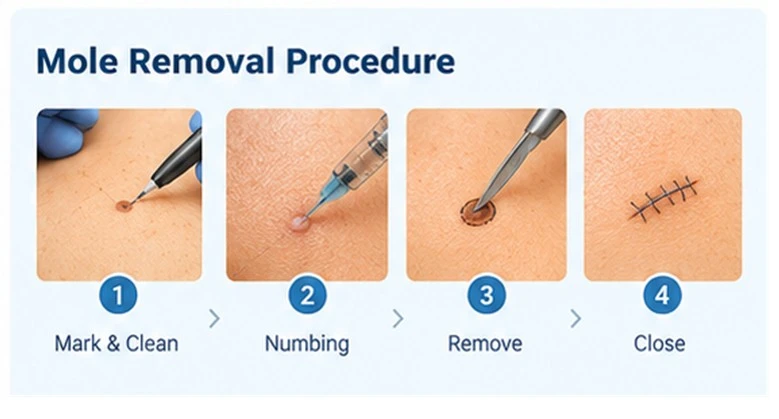
Illustrative overview only. The exact steps vary by removal technique and clinical findings.
Types of Mole Removal Methods
If you are wondering how to remove moles, the safest answer is to let a dermatologist choose the method after examining the mole.
Each mole removal treatment has its own benefits, limits, and risks, so ask why a particular option suits your mole.
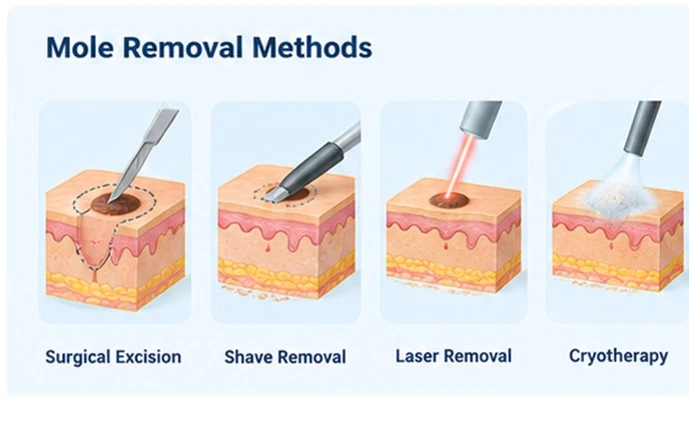
Removal methods are not interchangeable. Laser and cryotherapy may not provide tissue for laboratory testing; a dermatologist should choose the method after examination.
Surgical Excision
In surgical excision, the surgeon cuts out the mole with a scalpel, often taking a small margin of healthy skin. Bleeding is controlled with pressure or cautery, and the area is closed with stitches. Healthline says excision is typically used when a mole may be cancerous.
Shave Excision
Shave excision removes the mole level with the surrounding skin using a razor or surgical blade. It provides a tissue sample, but it cannot show deep tumor margins. Moles removed this way are somewhat more likely to come back than those removed by excision.
Punch Biopsy
A punch biopsy uses a circular tool that “punches” out the mole. According to MD Anderson Cancer Center, your dermatologist chooses the technique based on the mole type and how much tissue the pathologist needs.
Laser, Electrocautery, and Cryotherapy
Some clinics offer laser mole removal, electrocautery, or cryotherapy (liquid nitrogen) for noncancerous moles. Cleveland Clinic says these are not usually recommended because no sample remains to test and moles are more likely to return. If you consider laser mole removal, ask whether the mole will be tested.
Excision vs Shave Excision
| Feature | Surgical excision | Shave excision |
| How it works | Scalpel cuts out the mole with a margin | Blade shaves the mole level with the skin |
| Tissue sample | Yes | Yes |
| Deep margins | Can be assessed | Cannot be assessed |
| Closure | Stitches | Area may be lightly cauterized |
| Chance of regrowth | Lower | Somewhat higher |
Why Biopsy and Lab Testing Matter
A biopsy lets a pathologist examine the mole under a microscope to see whether it is benign, precancerous, or cancerous. This is the main medical advantage of professional mole removal.
If the result shows skin cancer, further treatment can start right away, which may reduce the chance of spread. Home methods and some nonsurgical methods leave no sample, so this step is lost.
Risks and Side Effects of Mole Removal
When a dermatologist does it in the office, the procedure is low risk. Even so, every procedure carries some risk.
Scarring
Scars are possible and may or may not be noticeable. After a shave excision, the dermatologist may lightly cauterize the area to improve how the scar looks once healed.
Infection, Bleeding, and Nerve Damage
The other listed risks are bleeding, infection, nerve damage, and the mole returning. Following your wound-care instructions helps lower the infection risk.
Mole Removal Aftercare and Recovery
Good wound care supports healing and lowers the chance of infection. Follow your dermatologist’s instructions closely.
Daily Wound Care
After the procedure, the dermatologist applies petroleum jelly and a bandage. Keep the wound clean, moist, and covered, and change the dressing daily or as instructed. Once it has healed, use sunscreen whenever the area is exposed.
Healing Time
Healing usually takes two to three weeks, depending on your overall health and the size of the mole. You can continue your daily activities, though you may feel some soreness. Stinging or burning in the first few days is expected.
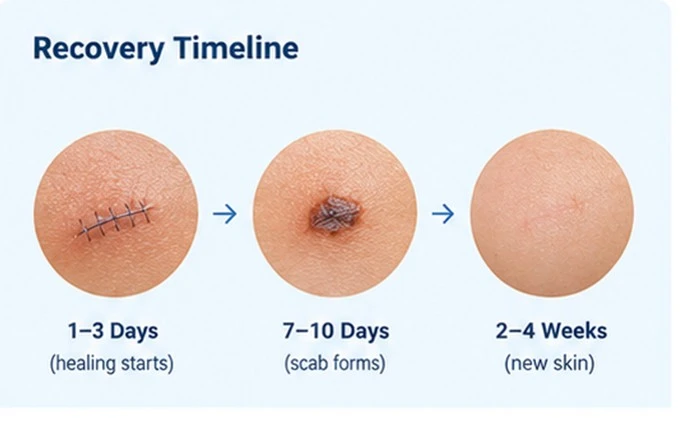
Healing varies by procedure and person. Follow your dermatologist’s wound-care instructions rather than relying on a fixed timeline.
Returning to Work or School
Most removals are brief outpatient procedures. You can usually drive yourself home and return to work or school immediately, while continuing to follow your aftercare instructions.
When to Call Your Doctor After Mole Removal
Call your dermatologist if you notice any of the following:
- Bleeding that does not stop
- Signs of infection, such as redness or pus
- You are unhappy with how the area looks after it heals
- The mole grows back
Can a Mole Grow Back After Removal?
Most moles removed by dermatologists are permanently gone, but some return. Regrowth can happen when some mole cells are left behind during the procedure.
A returning mole does not automatically mean cancer, but it should be checked. Cleveland Clinic notes that benign moles that return after nonsurgical removal can sometimes show features of skin cancer.
Why You Should Not Remove a Mole at Home
Many websites promote do-it-yourself tips, but these methods are not proven to work, and some may be dangerous. Talk to your doctor before trying any home remedy.
Home attempts also mean no one tests the mole, so a cancer could be missed.
Common DIY Methods and Products to Avoid
Several popular methods circulate online. None is proven, and they share the same risks: infection, scarring, and missed cancer.
Kitchen and Natural Remedies
Healthline lists apple cider vinegar, garlic, and iodine, along with banana peel, tea tree oil, hydrogen peroxide, and aloe vera. There is no evidence that these work, and some may be dangerous.
Mole Removal Creams and Pens
A mole removal cream is typically used after scraping the top of the mole, and labels claim a scab will take the mole with it. Studies have reported thick scars from such creams. Cleveland Clinic adds that home lasers can make cells look cancerous when they are not.
Cutting or Shaving a Mole Yourself
Cutting a mole with scissors or a razor blade raises the risk of infection, especially with unsanitized tools, and can leave a permanent scar. You also cannot tell whether the mole is melanoma.
Risks of DIY Mole Removal
Dermatologists give these main reasons to avoid home removal:
- The mole might be cancerous
- You might not remove the whole mole
- You risk infection
- You might develop a significant scar
Safer Alternatives
If you search for “how to remove moles from face,” you will find risky home tips. Conceal the mole with makeup instead. A hair growing from a mole can be safely clipped or plucked. For actual removal, see a dermatologist.
Mole Removal for Children and Teenagers
Moles often appear in childhood or the teen years. Some dermatology clinics suggest waiting until the teenage years before considering removal, so the young person can help decide and cope better with the procedure.
Children who have not been protected from the sun tend to grow more moles, so daily sun protection matters. A dermatologist can advise on any mole that looks suspicious or changes.
Sun Protection and Regular Skin Checks
Sun protection and regular checks lower the chance that a change goes unnoticed. Both are simple habits.
Sun Protection Tips
- Stay out of the sun during peak times
- Use sunscreen year-round
- Wear protective clothing
- Do not use tanning lamps or beds
Monthly Skin Self-Checks
Check your moles regularly and note any changes using the ABCDE rule. Pick a set day, such as the same date each month, and keep your annual screening visit with a dermatologist.
Mole Removal Cost and Insurance Coverage
No single price applies to every case, so this article does not quote one. Ask for an estimate after the dermatologist examines the mole.
Factors That Affect Mole Removal Cost
The mole removal cost usually depends on the removal method, the mole’s size and location, the dermatologist’s experience, and whether the tissue goes for lab testing. Simple procedures generally cost less than complex ones.
Is Mole Removal Covered by Insurance?
Coverage varies by insurer and country. Removal of a suspected cancer may be treated differently from cosmetic removal, so confirm with your provider before the procedure.
How to Choose a Dermatologist for Mole Removal
Choose a qualified dermatologist. Cleveland Clinic notes that dermatologists are specially trained to perform skin surgeries such as mole removal safely and to run diagnostic tests.
Consider asking these questions during your consultation [Contact Us URL]:
- Will the mole be sent for lab testing?
- Which method do you recommend, and why?
- What will aftercare involve?
Mole Removal in Lahore, Pakistan
If you live in Lahore, look for a dermatologist who can examine the mole, explain the method, and arrange lab testing before any mole removal. Bring the questions listed above to your consultation.
[Add clinic name, doctor qualifications, address, and booking link here]
Mole Removal FAQs
Does mole removal hurt?
No. The area is numbed first, so you should not feel pain during the procedure. You may feel stinging or burning for a few days afterwards.
How long does a mole removal wound take to heal?
Healing usually takes two to three weeks, depending on your overall health and the size of the mole.
Can I remove a mole at home?
No. Dermatologists advise against it, including with a mole removal cream, pen, or home laser. The mole could be cancerous, and home methods risk infection and scarring.
Can a mole come back after removal?
Yes, sometimes. If a mole returns after healing, contact your dermatologist.
Is mole removal covered by insurance?
It depends on your insurer and whether the removal is medical or cosmetic. Check with your provider first.
When should I see a dermatologist about a mole?
See one if a mole changes, itches, bleeds, is painful, has irregular borders, or appears after age 30.
Conclusion
Mole removal is a quick, low-risk procedure when a dermatologist performs it, and testing the mole is its main medical benefit. Avoid home methods, protect your skin from the sun, and report any change in a mole.
If a mole is changing or bothers you, book an exam instead of waiting. You can read about mole removal treatment [Services page URL] or get in touch [Contact Us URL].
References
1. Cleveland Clinic. “Mole Removal.” Last updated 06/21/2022. https://my.clevelandclinic.org/health/treatments/23312-mole-removal
2. Healthline. “Everything You Should Know About Mole Removal.” Medically reviewed by Reema Patel, MPA, PA-C; updated April 12, 2023. https://www.healthline.com/health/how-to-remove-moles
3. MD Anderson Cancer Center. “What to expect when you have a mole removed.” https://www.mdanderson.org/cancerwise/2025/04/what-to-expect-when-you-have-a-mole-removed.html
4. DermEsthetic Skin, Hair & Laser Clinic (Lahore, Pakistan). “Mole Removal.” Site: www.dermesthetic-clinic.com https://www.dermesthetic-clinic.com/mole-removal-treatment-in-lahore-sialkot/