

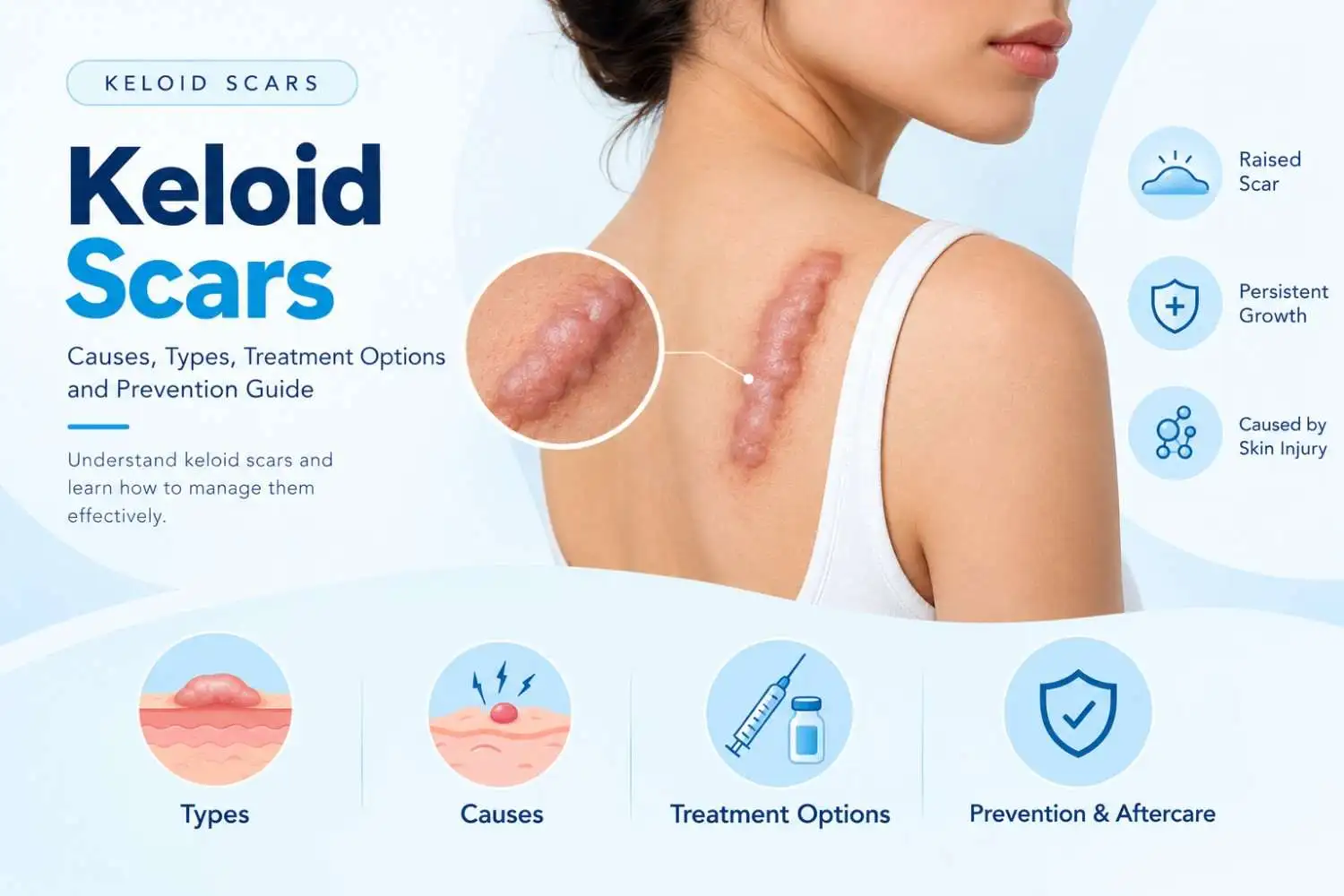
A keloid scar is a raised scar that grows larger than the wound that caused it. Keloids do not fade on their own, and they can itch, hurt or affect how you feel about your skin. This guide explains what keloids are, why they form and how doctors treat and prevent them.
Keloid Treatment usually combines more than one approach, and keloids can return even after successful treatment. Because some methods can make a keloid worse, it is best to avoid self-treatment and plan care with a dermatologist or plastic surgeon.
What Is a Keloid Scar?
A keloid scar is an abnormal scar that rises above the skin and extends beyond the edges of the original injury. It forms when the body keeps repairing a wound after healing should have stopped. Keloids can take months or even years to develop.
Understanding keloid scar vs hypertrophic scar differences matters because the two are managed differently. Keloids do not go away on their own, while some hypertrophic scars settle over time.
Keloid vs Hypertrophic Scar: What Is the Difference?
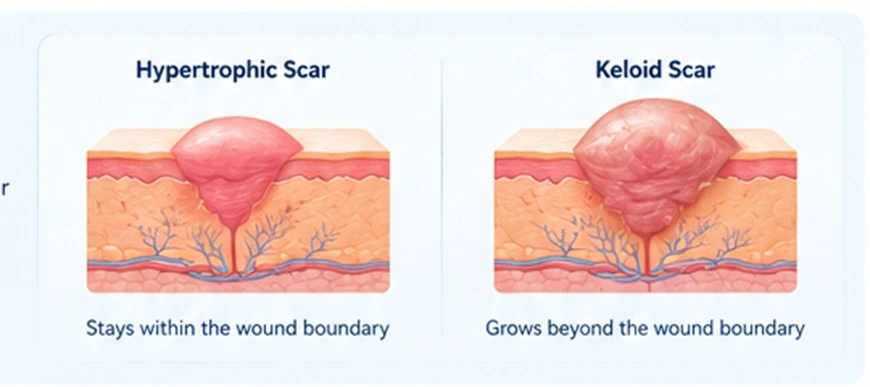
Visual comparison of a keloid scar and a hypertrophic scar.
Both scars are raised, but a hypertrophic scar usually stays within the boundary of the original wound and may flatten by itself. A keloid spreads into surrounding normal skin and does not regress. In the hypertrophic scar vs keloid question, spread beyond the wound is the key difference.
Why Do Keloids Grow Beyond the Original Wound?
Keloids reflect an abnormal healing process in which fibroblasts, the cells that make collagen, stay overactive. The extra collagen and ongoing inflammation keep the scar growing into nearby skin. Doctors do not fully understand why this happens in some people.
Are Keloids Harmful or Cancerous?
Keloids are not cancer and are not physically harmful, but they can cause itching, pain and distress. Rarely, other growths can look like keloids, so a doctor may take a skin biopsy to be sure of the diagnosis.
What Does a Keloid Look Like? Symptoms and Common Locations
Keloids look different from person to person. They are raised, may be round, oval or irregular, and often differ in colour from the surrounding skin.
Appearance on Different Skin Tones
Keloids can be pink, red, purple or brown, and may look darker than your natural skin tone. Some have a dark edge with a lighter centre. They can feel hard or soft and look smooth and shiny or wrinkled. Sun exposure may darken them permanently.
Do Keloid Scars Hurt or Itch?
Symptoms often include itching, tenderness and a burning feeling while the scar grows. Pain may ease once growth stops, but pressure on the scar can still hurt. Keloids over joints can cause irritation with movement, and large ones can limit the range of motion.
Where Keloids Appear Most Often
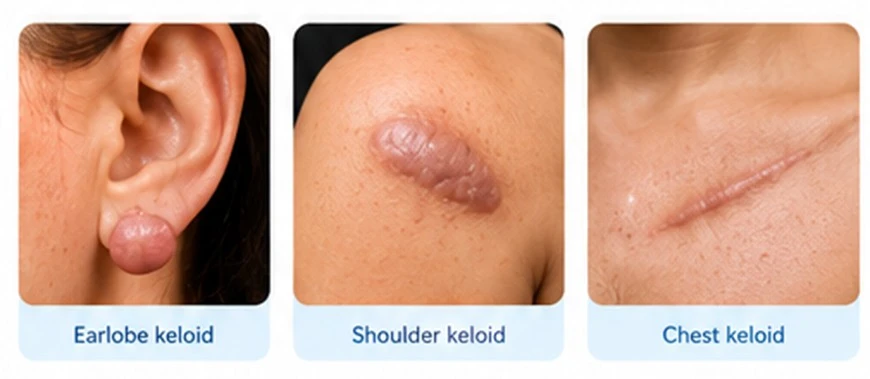
Common body locations where keloid scars may develop.
Keloids can form anywhere on the skin. They are most often seen where skin has been injured or is under tension, including the ears, chest, shoulders, back, abdomen and jaw.
Ear Keloids
Keloid scar ear problems often begin after a piercing. The earlobe is a common site, and these keloids can enlarge over time if left untreated.
Chest, Shoulders and Back
The centre of the chest, the shoulders and the upper back are frequent sites. Areas under constant skin tension, such as the deltoid region of the shoulder, are especially prone.
Abdomen, Jaw and Other Areas
Keloids also appear on the abdomen, often after surgery such as a C-section, and along the jaw. Any area of skin injury can be affected, so the location depends on where the trigger occurred.
When Do Keloids Appear After an Injury?
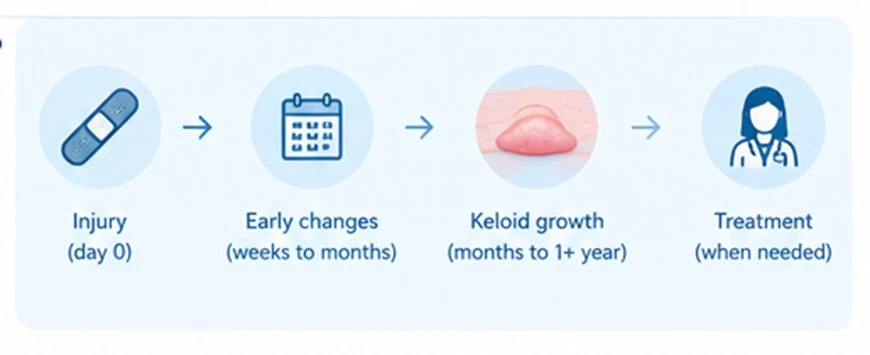
Illustration of how a keloid may develop after a skin injury over time.
Keloids usually appear within months of an injury, but some develop up to a year or longer afterward. Cleveland Clinic notes they can take months to years to develop, which is why the original cause is easy to forget. They tend to grow slowly.
What Causes Keloid Scars?
Keloid scar causes are not fully understood. Researchers link keloids to a mix of genetic and environmental factors that disrupt normal healing after a skin injury.
How Keloids Form: Collagen, Fibroblasts and Inflammation
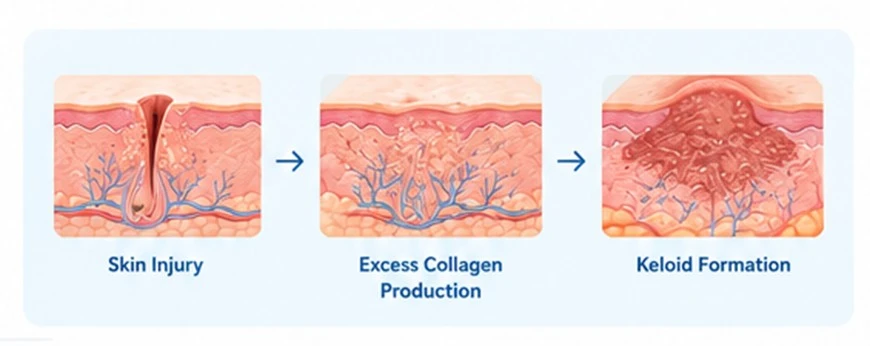
Educational illustration of collagen overproduction during keloid formation.
After an injury, collagen helps rebuild the skin. In keloids, fibroblasts make too much collagen and ignore the normal signals that end repair. Chronic inflammation in the deeper dermis and signalling molecules such as TGF-β are thought to keep this process going.
Common Triggers
Almost any skin injury can trigger a keloid in someone who is prone to them. The trigger may be minor and easy to overlook.
Acne, Bug Bites and Chickenpox
Inflammatory skin changes such as acne, insect bites and chickenpox can leave keloids, particularly on the chest, back and shoulders. They are easy to miss as triggers because the scar may appear well after the skin has healed.
Piercings and Tattoos as Triggers
Piercings and tattoos are deliberate skin injuries and well-known triggers. Cleveland Clinic advises people at higher risk to avoid them. If you already have a keloid, ask your doctor before getting either.
Cuts, Burns, Shaving and Surgical Incisions
Cuts, burns, shaving injuries and surgical incisions, including C-section scars, can all lead to keloids. Surgery on someone who is keloid-prone can itself trigger a new or larger keloid.
Skin Tension and Wound Healing
Mechanical stress on healing skin is considered a contributing factor, which may explain why keloids favour areas such as the chest and shoulders. Closing surgical wounds with minimal tension is one way surgeons try to lower the risk.
Who Is at Risk of Keloids?
Anyone can develop a keloid, but certain traits raise the risk, and several often occur together.
Family History and Genetics
Having a biological relative with keloids raises your risk. Cleveland Clinic describes a likely inherited tendency to make extra collagen, known as keloid-prone skin, although the specific gene is unknown.
Skin Tone and Ethnicity
Keloids are more common in people with darker skin tones, including people of African, Asian and Hispanic descent. Studies report wide differences between populations, from under 1% in the UK to about 16% in the Congo, and around 10% among African-American groups.
Age, Pregnancy and Puberty
Keloids are most common between ages 10 and 30. Hormonal changes, including puberty and pregnancy, may also raise the risk. Research differs on whether keloids affect men and women equally, so sex alone is not a reliable predictor.
Genetic Conditions Linked to Keloids
Rare genetic conditions such as Rubinstein-Taybi syndrome are linked to a higher risk of keloids. Most people with keloids do not have such a syndrome.
How Are Keloids Diagnosed?
Diagnosis is usually simple because keloids have a distinctive look.
Physical Examination
A healthcare provider usually diagnoses a keloid by looking at the scar and asking about past injuries, surgeries and family history. Further testing is usually not needed.
When Is a Skin Biopsy Needed?
A biopsy removes a small piece of tissue to examine under a microscope. Doctors use it when they suspect another condition or want to rule out skin cancer. Keloids typically show thick, irregular keloidal collagen bundles.
Conditions That Can Look Like Keloids
Hypertrophic scars are the most common lookalike. Rarely, tumours such as dermatofibrosarcoma protuberans can mimic keloids, so a growth that is unusual or changing quickly should be checked by a doctor.
Do Keloid Scars Go Away on Their Own?
No. Keloid scars do not go away on their own, although treatment can reduce their size and appearance.
Why Keloids Don’t Fade
Unlike normal scars, keloids stay in an active growth state, with persistent fibroblast activity and ongoing collagen build-up. That is why they do not flatten naturally. Treatment can soften, shrink or flatten them, but not every method removes them completely.
Can Keloids Come Back After Treatment?
Yes. Keloids can return after treatment, sometimes larger than before, and new ones can form after new injuries. Recurrence is especially high after surgery alone, with reported rates of 45% to 100%. Combining treatments lowers the risk.
How Are Keloids Treated?
Keloid scar treatment depends on the size, shape, depth and location of the scar, as well as your age, general health and past response to treatment. No single option works for every keloid.
Most people need more than one approach. Do not try to cut, tie or freeze a keloid at home, because it can make the scar worse. Follow only the simple measures your provider approves.
Why One Treatment Is Rarely Enough
Keloid treatment usually combines methods, such as softening the scar with injections and then using laser or pressure to limit regrowth. Combination plans tend to work better than a single approach. Your provider adjusts the plan based on how the scar responds.
Silicone Gel and Sheets
Silicone gel or sheets are a common first-line option, especially for new or small keloids and after injury or surgery. Sheets are often worn 12 to 24 hours a day for several months, while gel is applied twice daily. Folliculitis is a possible side effect.
Pressure Garments and Compression Therapy
Pressure garments apply steady pressure to a healing scar and are often used after surgery. Mayo Clinic suggests wearing them 12 to 24 hours a day for 4 to 6 months, and some sources suggest longer. Many people find comfort and compliance difficult.
Corticosteroid Injections and Steroid Tape
A keloid injection places a corticosteroid such as triamcinolone directly into the scar to reduce collagen and flatten it. Small keloids may need monthly injections for up to six months. Steroid tape is a painless alternative used in some guidelines.
5-Fluorouracil, Bleomycin and Verapamil Injections
Doctors may inject 5-fluorouracil (5-FU), bleomycin or verapamil, often when steroids alone fail. 5-FU tends to work better combined with a steroid, while evidence for verapamil is mixed. A specialist should give these.
Cryotherapy
Cryotherapy freezes the keloid with liquid nitrogen and is mainly used for small keloids. It may be repeated and is sometimes done before steroid injection. Intralesional cryotherapy, delivered inside the scar, appears more effective than surface freezing.
Laser Treatment
Pulsed-dye laser can flatten large keloids, ease itch and fade colour. Treatment is given over several sessions, usually 4 to 8 weeks apart, and may be combined with cortisone injections. Colour change is a risk, especially in brown and Black skin.
Radiation Therapy
Low-dose radiation slows the overactive fibroblasts that produce collagen. It is most effective after surgery to reduce recurrence, and several sessions may be needed. It is not recommended for pregnant patients or children under 12.
Keloid Removal Surgery
Surgical removal is possible, but it is rarely used alone because cutting the skin is itself an injury that can trigger a bigger keloid. It is usually reserved for keloids that have not responded to other treatments.
Why Surgery Alone Often Fails
Studies report recurrence rates of 45% to 100% when keloids are removed surgically without extra treatment. The new scar often grows back larger than the original.
Surgery With Radiation or Steroids
Adding radiation after surgery lowered recurrence to as little as 0% to 8.6% in one review, and combining surgery with steroid injections brought rates below 50% in most studies. Compression garments are often added during healing.
Onion Extract and Natural Remedies
There are no proven natural methods to remove keloids. Some research suggests onion extract, taken by mouth or applied to the skin, may improve the appearance of keloids and ease itch and pain, but the evidence is limited.
Over-the-Counter Keloid Treatments
No keloid scar removal cream can reliably erase an established keloid. Mayo Clinic notes that non-prescription corticosteroid cream or silicone gel can ease itch, and silicone may help flatten the scar. Ask your provider before relying on any product.
Emerging Treatments
Research is exploring new creams and injections to slow keloid growth, botulinum toxin, stem cell therapy and genetic markers in keloid tissue. These remain under study, so ask a specialist what is currently supported by evidence.
Treating Ear Keloids and Piercing Keloids
Ear keloids often follow piercings, and the earlobe is a common site. Treatment follows the same principles as for other keloids, including injections, pressure and sometimes surgery combined with steroids or radiation. The location affects the choice, so your doctor tailors the plan.
Because surgery itself can trigger regrowth, ask your provider about pairing it with steroid injections or radiation. If you are keloid-prone, avoid new piercings.
Keloid Treatment for Children
Keloids can occur in children and teenagers, and treatment choices are narrower. Pressure therapy is sometimes used in children because its side effects are minimal compared with more invasive options.
Radiation is not recommended for children under 12. A dermatologist can recommend age-appropriate options and explain the risks of each one.
Side Effects and Risks of Keloid Treatments
Every keloid treatment has trade-offs, so discuss the risks with your provider before you begin.
Injection Side Effects
Steroid injections can cause pain, skin thinning, spider veins and light or dark patches at the injection site. 5-FU may cause burning, bruising and ulceration. Treated keloids can still return after injections.
Laser and Cryotherapy Side Effects
Laser and cryotherapy can cause blistering, crusting, pain and skin colour changes. Mayo Clinic notes colour changes are more common and more noticeable in people with brown or Black skin.
Radiation Therapy Risks
Radiation can cause skin reactions such as redness and later scarring or permanent pigment changes. Mayo Clinic lists long-term cancer as a possible risk, while one review reports that cancer after keloid radiation appears rare. Discuss this directly with your doctor.
Surgery Risks
Surgery can leave a larger keloid than before and has a high recurrence rate when used alone. Good wound care and add-on treatments are essential to lower this risk.
How to Prevent Keloids
You cannot always prevent keloids, but if you are at higher risk, you can lower the chances.
Protect Skin From Injury
Avoid unnecessary skin injuries, wear safety equipment when needed and use bug spray outdoors. Ask a dermatologist about managing acne, since acne can trigger keloids.
Piercings and Tattoos If You Are Prone to Keloids
If you or a relative has had keloids, the safest choice is to avoid piercings and tattoos. Talk to your doctor before getting either if you are unsure of your risk.
Wound Care and Silicone After an Injury
After an injury, apply a silicone gel patch or wound dressing as advised and follow wound-care directions carefully. Mayo Clinic notes that these steps help prevent keloid scars, although they do not guarantee prevention.
Preventing Keloids After Surgery
Tell your surgeon about any keloid history before a procedure. Low-tension wound closure, silicone and compression may be used. Some experts suggest monitoring scars for 3 to 12 months and starting steroid tape or injections at the first sign of firmness.
Sun Protection for Keloids
Sun exposure can permanently darken a keloid and make it more visible. Cover the scar with clothing or apply sunscreen before going outside.
When to See a Doctor About a Keloid
Early review helps you plan treatment, especially if the scar is growing or bothering you.
Signs You Should Book an Appointment
See a provider if a keloid affects your appearance or self-esteem, causes pain, limits movement, is not improving with treatment or returns after treatment. Also seek review for any scar-like growth that changes quickly.
Dermatologist or Plastic Surgeon?
Start with a healthcare provider, who may refer you to a dermatologist. A plastic surgeon may become involved when surgical removal is being considered.
What to Expect at Your Appointment
Your provider may ask when the keloid appeared, whether it is changing, whether relatives have keloids and what treatments you have tried. Bring a list of past injuries and surgeries.
Questions to Ask Your Healthcare Provider
Questions can help you make the most of your visit:
- What type of treatment do you recommend?
- What are the side effects and chances of the keloid returning?
- What caused this scar?
- Is it safe for me to get piercings or tattoos?
- How can I prevent a keloid after surgery?
Living With Keloids
Keloids are not harmful, but they can affect confidence and daily life. Support and a clear plan make them easier to manage.
Emotional and Social Impact
Keloids can lower self-esteem and cause social isolation, anxiety or low mood, especially when they are visible. Talking to a mental health professional can help rebuild confidence if the scar affects how you feel about your body.
Self-Care Tips
Follow your provider’s directions for wound care and compression, even when it is uncomfortable. Silicone gel or corticosteroid cream may ease itch, and sun protection helps prevent permanent darkening.
Keloid Scar FAQs
Can I Remove a Keloid at Home?
No. Cutting, tying or freezing a keloid at home can trigger a larger keloid and cause infection or scarring. Use only treatments your provider approves.
Can a Keloid Appear Without an Obvious Injury?
Keloids often appear months or years after an injury, so the cause is easy to forget. Even a minor injury such as acne, a bug bite or shaving can be the trigger.
Do Keloids Affect Movement?
They can. Large keloids, especially over joints, may stiffen the skin and reduce range of motion. Tell your provider if movement is affected.
Is Silicone Gel Enough on Its Own?
Silicone gel can help soften small or new keloids and ease itch, but it rarely clears a large established keloid. Most people need additional treatment, such as injections, so ask your provider.
Conclusion
A keloid scar is a raised scar that grows beyond the original wound and does not fade on its own. It is harmless, but it can itch, hurt and affect confidence, and it can return after treatment.
If you have a keloid or are at risk of one, see a dermatologist early, avoid self-treatment and discuss prevention before any piercing, tattoo or surgery.