

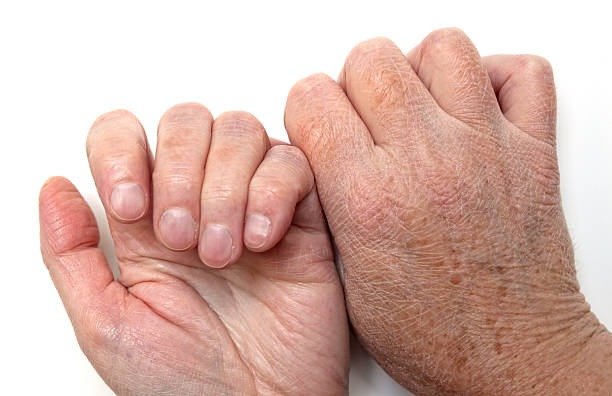
There are two types of ageing processes: intrinsic and extrinsic ageing. Intrinsic or chronological ageing affects the skin of the entire body, including sun-protected sites whereas Extrinsic ageing is induced by sun or chronic ultraviolet (UV) radiation exposure, smoking, and other pollutants, and is superimposed on the intrinsic ageing process.
Intrinsic ageing affects everyone, whatever their skin type. Extrinsic ageing affects people who are chronically exposed to sunlight — this is known as sun damage or photoageing. People who typically present with marked signs of photoageing include those who:
- Have Fitzpatrick sun-reactive skin types I-II (with red/blond hair and blue eyes)
- Live in the tropics or subtropics
- Live at high altitudes
- Work outdoors or spend long periods outdoors for recreation
- Have sometimes been exposed to artificial sources of UV radiation, such as indoor tanning
- Have a genetic predisposition to premature ageing (eg, progeria which is rare).
Premature ageing of the skin also affects tobacco smokers and those who have been chronically exposed to other environmental pollutants.
Ultraviolet radiation
UV radiation attacks the integrity of the skin.
- It causes thousands of alterations in the DNA of each cell every day.
- The multi-hit model, which has been proposed to describe how UV radiation interacts with components of the extracellular matrix, results in the deposition of a disorganised, elastic-fibre rich matrix (solar elastosis).
Menopause
The signs of intrinsic ageing begin at around 50–60 years of age. Women develop these signs earlier than men, which is attributed to a decrease in the protective effects of oestrogen during menopause.
Smoking
Smoking exposes the skin to several damaging factors.
- Nicotine narrows blood vessels and blood flow, reducing the amount of oxygen and nutrients that reach the cells.
- Many other chemicals in tobacco smoke increase dermal MMPs and degrade collagen and elastin.
- The heat from burning cigarettes and the facial muscle movements associated with smoking contribute to wrinkles.
- Chemicals such as nitrosamines and tar are carcinogens.

Nutrition
Nutrition is known to affect extrinsic ageing.
- Fruits, vegetables, legumes, herbs, and teas contain antioxidative compounds.
- Higher levels of vitamin C and increased linoleic acid intake have been associated with decreased wrinkling, dryness, and atrophy of the skin.
- In a nutritional study that recruited Greek, Australian, and Swedish subjects, resilience to photoageing was associated with a higher intake of vegetables, olive oil, fish, and legumes such as chicpeas, beans, peas, and lentils, and a lower intake of margarine, sugar and dairy products.
- A higher fat and carbohydrate intake has been associated with an increased risk of wrinkles and skin atrophy.
- Vitamin A, which can be applied topically (see our page Topical retinoids), has been observed to decrease the production of MMPs.
- The consumption of fish oil can also confer some sun protection.
Immune dysfunction
Skin ageing can be a symptom of immune deficiency diseases, immunosuppressive agents, and chronic psychological stress.
What are the clinical features of skin ageing?
Intrinsic ageing
Intrinsically aged skin appears dry and pale, smooth, thin, transparent, and unblemished.
- It is finely wrinkled, due to gravitational and conformational forces which determine how proteins are folded.
- Skin sagging or laxity may occur with body movement, due to loss of elasticity.
- The degrees of pigmentation in intrinsically aged skin are very mild and regular in comparison to photoaged skin.
- Aged skin tends to develop a variety of benign neoplasms, such as sebaceous hyperplasia and cherry angiomas.
- Skin cancers are less common in intrinsically aged skin than in extrinsically aged skin.
- The surface of the skin maintains youthful geometric patterns.
Signs of intrinsic ageing
Extrinsic ageing
Extrinsic ageing, such as photoageing, is related to environmental factors. Extrinsic ageing was first reported at the end of the 19th century, and was then described as ‘farmer’s skin’ or ‘sailor’s skin’.
- Extrinsic ageing affects habitually exposed areas of the body, such as the individual’s face, neck, and arms.
- The features of photodamage include roughness, sallowness, deep wrinkling, dyspigmentation, senile purpura, telangiectasia, and the development of a variety of benign and malignant skin lesions.
- Hyperpigmented lesions include diffuse mottling, freckles, lentigines, and flat seborrheic keratoses.
- Deep wrinkles are usually found on the individual’s forehead and in the peri-orbital region.
Sun-induced cutaneous changes vary considerably among individuals, reflecting inherent differences in vulnerability to sun exposure and repair capacity. Even among Caucasians, the appearance of photoaged skin of individuals with skin phototypes I–III often differs from that of individuals with skin phototypes IV–VI.
Ethnicity
The degree of photoageing is significantly affected by an individual’s ethnicity and Fitzpatrick phototype. Fair-skinned individuals of Northern European descent (Fitzpatrick phototypes I–III) are more prone to photoageing than individuals with skin of colour (Fitzpatrick phototypes IV–VI, which include people of African, African-American, Asian, and Latino or Hispanic descent), with melanin affording protection against sun-induced damage.
Hypertrophic and atrophic photoageing
In white Caucasians, severe facial photoageing tends to result in two phenotypes:
- Hypertrophic photoageing — this is characterised by deep furrows and a leathery appearance
- Atrophic photoageing — this is characterised by telangiectasia, a smooth, relatively unwrinkled appearance, and the development of a variety of benign and malignant skin lesions.
Dermatoporosis
Dermatoporosis is a term used to describe chronic cutaneous insufficiency and fragility associated with both intrinsic and extrinsic ageing. The features of dermatoporosis include:
- Skin fragility and atrophy
- Senile purpura
- Stellate pseudoscars (star-shaped white patches)
- Non-healing atrophic ulcers
- Dissecting haematomas (bruises that spread under the skin)
- Delayed wound healing.
How do we treat skin ageing?
Dry and discoloured skin
- Moisturisers will help improve dry and flaky skin.
- Alpha hydroxy acids, vitamin C, lipoic acid, soy isoflavones or retinoid creams applied regularly long term reduce dryness. They may also reduce the number of fine wrinkles and even out pigmentation.
- Many other products are under investigation, but their benefits are unclear.
Facial rejuvenation
Procedures that aim to rejuvenate photoaged skin include:
- Fillers (eg, hyaluronic acid, polytetrafluoroethylene and fat grafts) to disguise facial expression lines
- Botulinum toxin injections to reduce frowning and lessen deep furrows
- Vascular laser treatment and sclerotherapy (the injection of inflammatory agent into veins) to remove facial veins and angiomas
- Resurfacing procedures (eg, dermabrasion, chemical peels, and laser resurfacing)
- Cosmetic surgery to remove redundant sagging skin, including surgical or laser blepharoplasty for baggy eyelids, and meloplasty (face lift) to tighten jowls.
How do we prevent skin ageing?
Intrinsic ageing is inevitable. In perimenopausal women, systemic hormone replacement may delay skin thinning; the skin is less dry, with fewer wrinkles, and wound healing is faster than prior to treatment. Hormone replacement is less effective at improving skin ageing in the postmenopausal decades. The effects of topical oestrogens, phyto-oestrogens, and progestins are under investigation.
Protection from solar UV is essential at all ages. There are several steps that can be taken to minimise or avoid UV exposure.
- Be aware of daily UV index levels. In New Zealand, adhere to the advice provided by the Sun Protection Alert.
- Avoid outdoor activities during the middle of the day.
- Wear sun-protective clothing (eg, a broad-brimmed hat, long sleeves and trousers or skirts).
- Apply very high sun-protection factor (SPF > 30), broad-spectrum sunscreens to exposed skin.
- Do not smoke, and where possible, avoid exposure to pollutants.
- Take plenty of exercise — active people appear younger than inactive people.
- Eat fruit and vegetables daily.
Many oral supplements with antioxidant and anti-inflammatory properties have been advocated to retard skin ageing and to improve skin health. These include carotenoids; polyphenols; chlorophyll; aloe vera; vitamins B, C, and E; red ginseng; squalene; and omega-3 fatty acids. Their role in combatting skin ageing is unclear.