

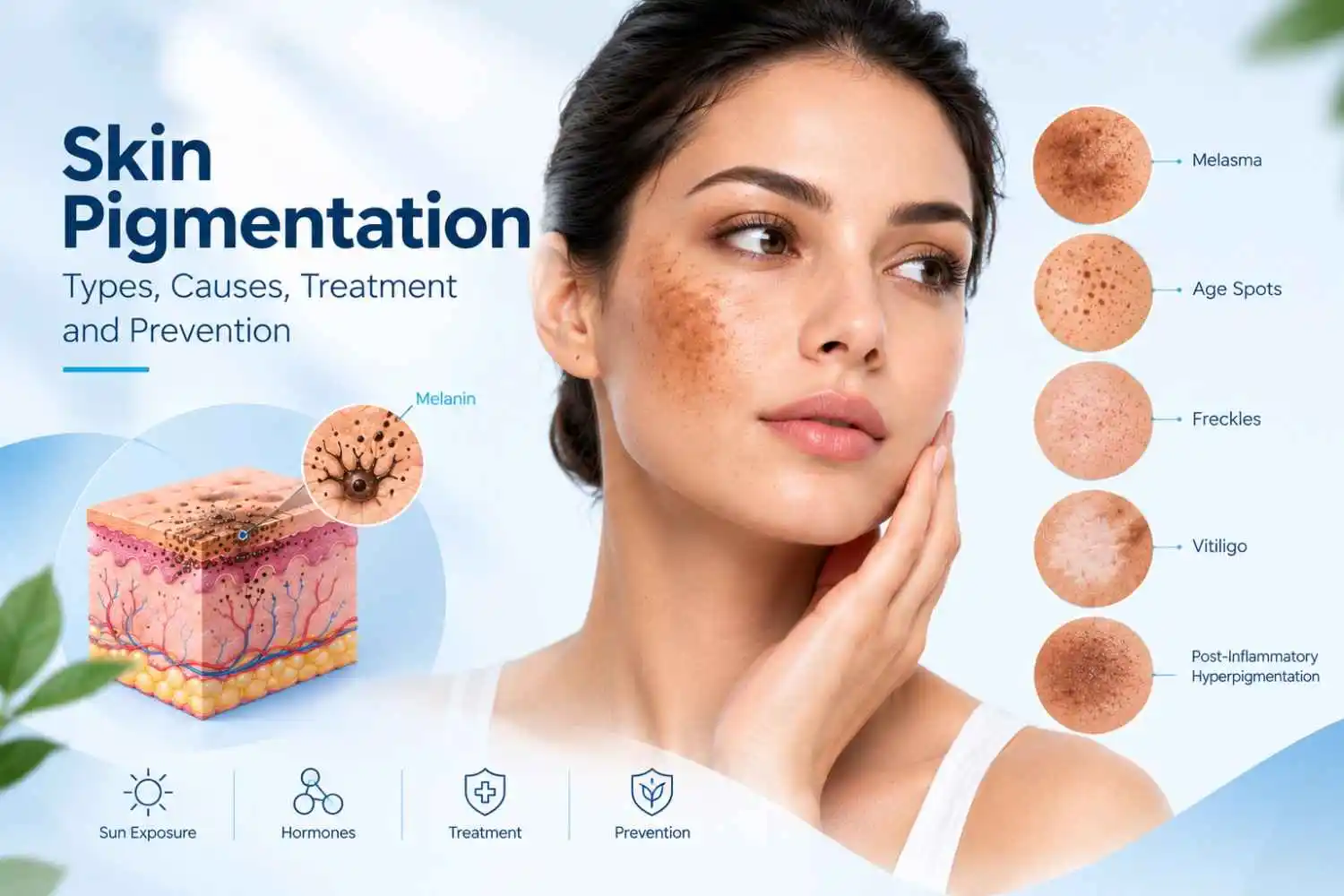
Skin Pigmentation: Types, Causes, Treatment and Prevention
Skin pigmentation is the colour of your skin, and it depends mainly on a pigment called melanin. When melanin production changes, you may notice darker spots, lighter patches or uneven tone. Pigmentation on face areas is especially noticeable, which is why many people look for answers early.
Most pigmentation is harmless, but the right approach depends on the cause. This guide explains the types of pigmentation, what triggers them, which treatments and creams are used, how to prevent new marks, and when a change deserves a dermatologist’s attention.
What Is Skin Pigmentation?
Skin pigmentation describes the natural colouring of your skin. Genetics largely set your baseline, while sun exposure, hormones and health conditions can change it over time. Pigment levels differ from person to person, which explains the wide range of skin tones.
What Does Pigmentation Mean?
Pigmentation means colouring. In skin, it refers mainly to colour created by melanin, although carotene can add a yellow-golden tint and haemoglobin can add pink or reddish tones. If you are asking what is pigmentation on face skin, it is simply this same colouring, which may look even or patchy.
How Skin Gets Its Colour: Melanin and Melanocytes
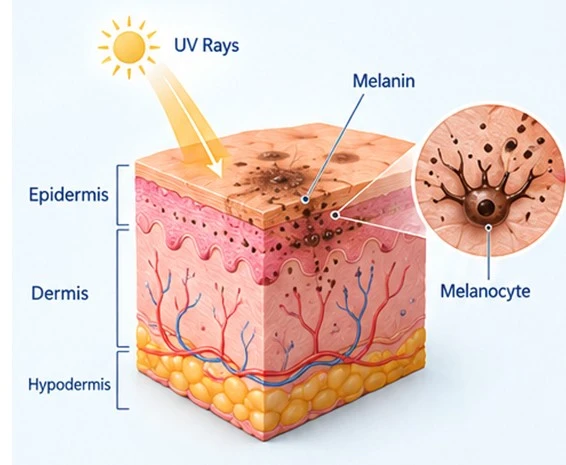
Melanocytes are specialised cells that make melanin through a process called melanogenesis. Most people have roughly similar numbers of melanocytes, but the amount of melanin they produce varies with genetics. Keratinocytes then store the melanin, positioning it to help shield skin cells from DNA damage.
Eumelanin vs Pheomelanin
Eumelanin is brown to black and helps protect skin by limiting harmful UV rays. Pheomelanin is yellow to red and offers very little UV protection. Your skin colour reflects the balance between the two, and hormones, genes and other cell interactions can shift that balance.
Types of Skin Pigmentation Disorders
Skin pigmentation disorders fall into three main groups, depending on how much melanin is present. Changes can affect small patches or wider areas of the body. Knowing which type you have helps you choose a suitable approach.
Hyperpigmentation
Hyperpigmentation happens when extra melanin makes skin darker, creating dark spots or patches. Triggers include sun exposure, hormones, inflammation, ageing and some medicines. Because facial marks are easy to see, this type often prompts concern about the face.
Hypopigmentation
Hypopigmentation occurs when low melanin levels lighten the skin. Past injuries such as burns, blisters or infections can cause it, as can inflammatory conditions and genetic conditions like albinism. The affected skin looks paler than the surrounding area.
Depigmentation
Depigmentation is a total loss of pigment, leaving the skin white. Vitiligo, an autoimmune condition, is a common cause and produces smooth white patches. Unlike hypopigmentation, where some colour usually remains, depigmented skin has lost its pigment completely.
Common Pigmentation Conditions and Their Signs
Several specific conditions fall under these three types. Learning their typical signs makes it easier to describe your concern to a healthcare professional.
Age Spots and Sun Spots
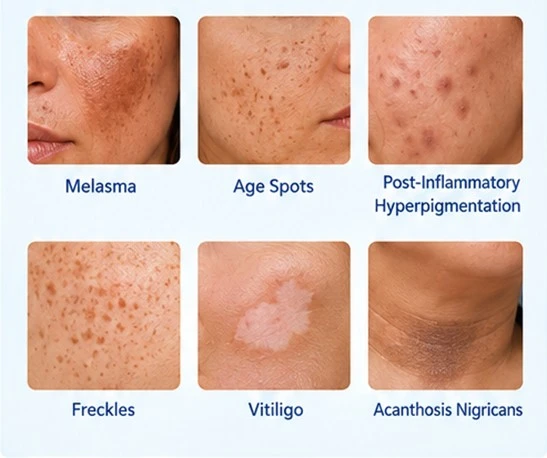
Age spots are small, flat, darker spots that deepen with sun exposure. They commonly appear on the face, arms and hands. Sun spots form in a similar way on areas that receive repeated UV exposure, so they reflect long-term sun damage.
Melasma
Melasma causes symmetrical, blotchy patches, typically on the cheeks, forehead or upper lip. Hormones and sun exposure often trigger it, which is why it is nicknamed the pregnancy mask. Birth control pills can also trigger or worsen it.
Post-Inflammatory Hyperpigmentation (PIH)
Post-inflammatory hyperpigmentation (PIH) leaves dark marks after acne, cuts or other skin inflammation. The inflammation activates melanocytes, which produce extra pigment during healing. Darker skin tones are more prone to this reaction.
Freckles
Freckles are small, concentrated spots of melanin, usually brown or tan. They are often genetic and darken with sun exposure. Freckles are typically harmless, but any spot that changes in shape, size or colour should be checked by a professional.
Vitiligo
Vitiligo is an autoimmune condition in which melanocytes are lost, causing smooth white patches. It can affect small areas or larger ones. Because it is a form of depigmentation rather than simple lightening, treatment is best guided by a dermatologist.
Albinism
Albinism is a genetic condition affecting melanin. A person may have no skin colour, lighter than usual colour, or patchy missing colour. It is linked to the lack of a melanin-producing enzyme and is present from birth.
Other Conditions: Pityriasis Alba, Tinea Versicolor and Acanthosis Nigricans
Pityriasis alba causes pale, scaly patches and often affects children and teenagers. Tinea versicolor, a fungal infection, can create lighter or darker patches. Acanthosis nigricans typically causes darker skin patches in body folds. Each has a different cause, so diagnosis matters.
What Causes Skin Pigmentation?
The causes of skin pigmentation include sun exposure, genetics, hormones, inflammation, medications and medical conditions. Some are preventable, while others are out of your control.
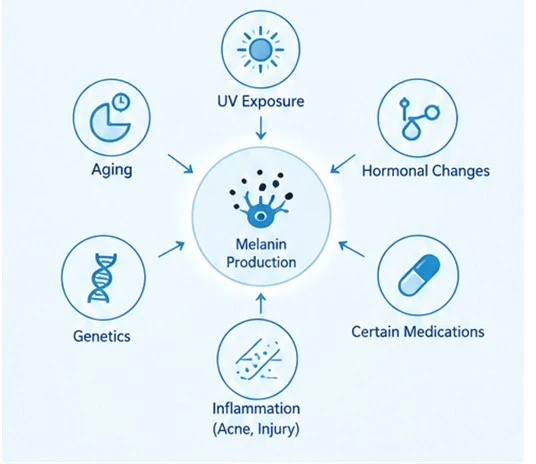
Pinpointing the causes of pigmentation on face skin matters because the best treatment depends on the trigger. The reason for pigmentation on face areas is often a mix of several factors working together.
Sun Exposure and UV Radiation
UV radiation stimulates melanocytes to make more melanin as a protective response, which causes tanning. Repeated exposure can also lead to sun spots and other dark marks, especially on exposed areas such as the face. Tanned skin is damaged skin, so protection matters.
Genetics
More than 125 genes influence skin pigmentation, working alongside hormones to set melanin levels. Genetics largely determine natural skin, hair and eye colour, and they can also create a predisposition to uneven pigmentation.
Hormonal Changes and Pregnancy
Rising hormone levels can activate melanocytes, leading to melasma during pregnancy. Birth control pills and hormone replacement therapy can have a similar effect. This is one common reason for pigmentation on face areas such as the cheeks and upper lip.
Inflammation, Acne and Skin Injury
Inflammation from acne, eczema, cuts, burns or irritation can trigger PIH. Squeezing or picking acne lesions can worsen the darkening. When the skin heals, extra melanin may remain behind as a dark mark.
Medications
Some medicines can darken skin or intensify pigmentation, including certain antibiotics, birth control pills, antimalarials and tricyclic antidepressants. UV exposure can make the affected areas worse. Do not stop a prescribed medicine on your own; speak with your doctor if you notice colour changes.
Medical Conditions
Addison’s disease, a rare adrenal gland disorder, can cause dark patches of skin. Diabetic complications may cause light brown, scaly spots known as diabetic dermopathy, and advanced venous disease can discolour skin around the ankles. These causes need medical assessment.
Ageing and Birthmarks
Ageing makes age spots more common, often after years of sun exposure. Birthmarks have separate origins: darker ones form when a single cell overproduces melanocytes, while red or purple ones come from misformed blood vessels.
Why Pigmentation Affects Darker Skin Tones Differently
People with darker skin tones produce more eumelanin, which gives more natural protection against UV rays. However, PIH is more likely, and Fitzpatrick skin types 4 to 6 carry a higher risk because of higher melanin levels in the skin.
Pigmentation is not only a concern for people with darker skin, though. It affects all skin types, but it tends to be more noticeable on darker tones. Treatment choices may need extra care, so seek a dermatologist experienced with skin of colour.
How Is Pigmentation Diagnosed?
A correct diagnosis comes first, because different types of pigmentation respond to different treatments. A healthcare provider can identify underlying causes before you start any new product.
Clinical Examination and Wood’s Lamp
A dermatologist examines the affected skin and asks about your history, medicines and sun habits. A Wood’s lamp examination uses a special light to help assess the pigment. This supports a more accurate diagnosis before treatment begins.
Professional Skin Analysis
Some clinics use imaging-based skin analysis technology to look at underlying concerns beneath the surface. It can support a personalised treatment plan. It does not replace a medical assessment of suspicious moles or sudden changes.
Skin Pigmentation Treatment Options
Skin pigmentation treatment depends on the cause, depth and type of pigment. Options range from over-the-counter products and daily sunscreen to prescription medicines and in-clinic procedures. Many people combine several approaches.
If you are comparing options or searching for the best treatment for pigmentation on face concerns, remember that no single option suits everyone. A dermatologist can match treatment for pigmentation on face skin to your diagnosis and skin type.
Can Pigmentation Be Reversed or Cured?
Treatment can reduce the appearance of pigmentation, but it cannot always remove it completely. Some discolouration fades with self-care and over-the-counter products, while other conditions need long-term management. Pigment can return if triggers such as sun exposure continue.
Topical Ingredients That Target Pigmentation
Topical treatments are the usual starting point, applied directly to the skin as creams, lotions or serums. Many work by slowing pigment production or speeding cell turnover. A pigmentation cream for face use should be chosen with your skin type and diagnosis in mind.
Hydroquinone
Hydroquinone is among the most widely used skin-lightening agents. It suppresses melanin production by blocking tyrosinase and is used for melasma, freckles and PIH. Availability and strength vary by country, and unsupervised use can cause side effects, so follow professional guidance.
Tyrosinase Inhibitors: Kojic Acid and Alpha-Arbutin
Tyrosinase is the enzyme that drives pigment production, so tyrosinase inhibitors reduce new pigment forming. Kojic acid and alpha-arbutin are two examples found in brightening products. They mainly limit new pigment, helping skin look brighter and more even-toned.
Vitamin C
Vitamin C is an antioxidant that inhibits melanin synthesis, helping reduce further pigmentation. It is often used in brightening serums, sometimes with hydrating ingredients such as hyaluronic acid. Consistent use matters, because visible results build gradually.
Retinoids
Retinoids are forms of vitamin A that speed up the skin-shedding cycle, helping lift dead skin cells and reduce visible pigmentation. They can also help with acne by reducing inflammation. Irritation and dryness can occur, so introduce them slowly.
Niacinamide
Niacinamide, a form of vitamin B3, is used in creams and serums to improve dullness, enlarged pores and uneven tone. One review notes it can suppress melanin formation. It is commonly paired with other brightening ingredients.
Prescription Treatments
Doctors may prescribe stronger options, such as tranexamic acid for melasma, topical steroids for inflammation-linked pigmentation, or triple combination creams containing hydroquinone, tretinoin and fluocinolone. Ruxolitinib cream is a prescription treatment used for vitiligo. These carry risks, so they need medical supervision.
Chemical Peels
Chemical peels use acids such as salicylic, glycolic or lactic acid to exfoliate the top layers of skin, which can lessen the look of dark patches. Professional-grade peels target sun spots, age spots and uneven tone. Because they act on the surface, deeper pigment may respond less.
Laser Treatment and IPL
Laser treatment for pigmentation works when the pigment absorbs the laser energy and breaks down, after which the skin naturally sheds it. Intense pulsed light (IPL) is a related light-based option. Results depend on pigment type and depth, so a professional should assess suitability for your skin tone.
Microneedling
Microneedling creates tiny micro-injuries that trigger the skin’s natural healing and improve the absorption of skincare ingredients. Clinics use it to help break down melanin in freckles and dark spots. It is often used alongside topical products and should be done by a trained professional.
Other Procedures: Dermabrasion, Cryotherapy, Plasma Pen and Radiofrequency
Dermabrasion and cryotherapy are listed among the options for hyperpigmentation. Plasma pen therapy and radiofrequency are newer approaches, so ask a dermatologist about the evidence and experience behind them. Not every procedure suits every skin type or condition.
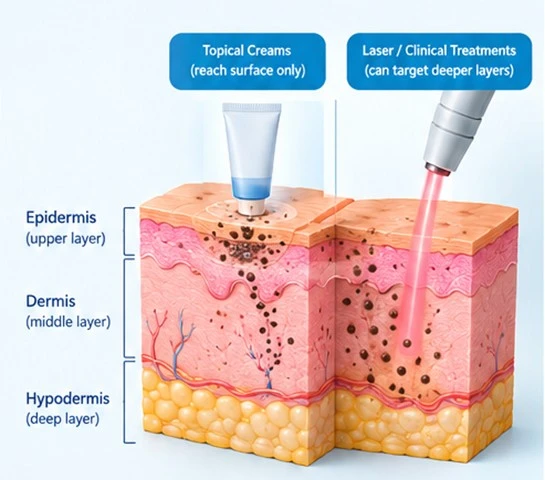
Why Some Treatments Don’t Reach Deeper Pigment
Melanocytes can sit high in the epidermis or deeper in the dermis. Many peels, lasers and topical products act mainly on the upper layers, so deeper pigment can be harder to treat. This helps explain why results differ between people and conditions.
Side Effects and Safety
Treatments can cause irritation, redness, dryness, peeling or sun sensitivity. Continuous use of topical steroids has been linked to local and systemic side effects. Introduce new products one at a time, and consult a doctor before starting any new medicine or treatment plan.
Treating Hypopigmentation and Depigmentation
Lighter skin needs a different approach from dark spots, because the goal is to restore or even out colour rather than reduce pigment.
Lighter Skin After Injury or Inflammation
When skin lightens after burns, blisters or infections, time is often the main treatment while the skin rebuilds. In the meantime, cosmetics can help even out skin tone. If lightening persists or spreads, see a healthcare provider.
Vitiligo and Other Chronic Conditions
For depigmentation from chronic conditions, a dermatologist may recommend prescription creams, light therapy, light-sensitive medicines, covering patches with dyes or, in some cases, surgery. The right choice depends on the cause and the extent of the patches.
Natural Remedies for Pigmentation
Many people prefer natural options, and some plant ingredients have been studied for pigmentation. Natural does not mean risk-free, and the evidence is generally less robust than for established medical treatments.
Licorice Root, Green Tea, Turmeric and Aloe Vera
Licorice root extract, green tea extract, turmeric (curcumin) and aloe vera are valued for their antioxidant and anti-inflammatory properties. Laboratory and small studies suggest some can inhibit tyrosinase or lighten skin. Allergic reactions are possible, including contact dermatitis to licorice root extract.
How Strong Is the Evidence?
Much of the research on natural ingredients comes from cell studies or small trials, so findings may not apply to everyone. Oils such as argan and jojoba have limited pigmentation-specific evidence. Treat natural products as supportive options and check with a dermatologist first.
Can You Treat Pigmentation at Home?
Mild pigmentation can often be managed at home with consistent care, but a diagnosis helps first. A simple routine and daily sun protection form the foundation.
Building a Daily Skincare Routine
A basic routine includes gentle cleansing, a targeted brightening serum, moisturiser and daily sunscreen. Introduce one active at a time so you can spot irritation. Consistent skin care can help reduce the appearance of pigmentation over time.
Over-the-Counter vs Prescription Products
An over-the-counter pigmentation cream or serum may contain vitamin C, niacinamide, kojic acid or alpha-arbutin. Stronger prescription products, such as higher-strength hydroquinone or tretinoin, need supervision. If a product irritates your skin, stop using it and ask a pharmacist or dermatologist.
How to Prevent Skin Pigmentation
Prevention is better than cure, because sun protection reduces new pigmentation and stops existing marks from darkening. Simple daily habits make the biggest difference.
Daily Broad-Spectrum Mineral Sunscreen
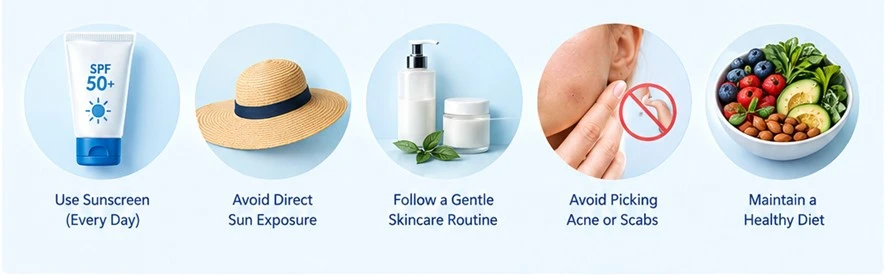
Wear a broad-spectrum, mineral-based, high SPF sunscreen every day, even when it is cloudy, because UV rays penetrate cloud cover. If you are choosing sunblock for pigmentation, pick one labelled broad-spectrum and reapply as directed on the label.
Protective Clothing and Peak Sun Hours
Sun-protective clothing, hats and shade add a physical barrier against UV rays. Avoid sun exposure during peak hours, roughly 10 a.m. to 4 p.m., when possible. These habits help reduce the risk of hyperpigmentation, including on the face.
Skin Habits That Help (Including Not Picking at Acne)
Avoid picking or squeezing acne, since this can leave post-inflammatory marks. Treat acne and eczema early, and avoid harsh products that irritate skin. Ask your doctor whether any medicine you take could affect your skin colour.
Is Pigmentation Skin Cancer?
Pigmentation is not always a sign of cancer, but cancerous cells can sometimes look like pigmented marks. Moles are the most familiar example, and not all moles are cancerous. Prolonged, unprotected UV exposure is linked with skin cancers such as basal cell carcinoma.
Warning Signs of a Suspicious Mole
Look for uneven borders, rapid changes in size, and changes in colour. Melanoma is a serious skin cancer, so any suspicious mole needs professional evaluation. Do not wait if a mole or patch changes in colour, texture or shape and does not fade.
When to See a Dermatologist
See a dermatologist or healthcare provider if a patch or mole changes in colour, texture or shape, or if pigmentation does not fade. Seek advice too if it spreads quickly, appears after starting a new medicine, or affects your confidence.
A professional can diagnose the cause, rule out serious conditions and recommend a safe plan. Consult a doctor before starting any new treatment, especially if you are pregnant or breastfeeding. For personalised care, visit our [Services page: URL_NEEDED] or [Contact Us page: URL_NEEDED].
Frequently Asked Questions
How long do pigmentation treatments take to show results?
Timing varies with the cause, treatment and your skin. Results often build gradually over weeks to months, and some conditions need long-term management. Your dermatologist can give a realistic timeline for your case, because no universal timeframe applies.
Does pigmentation come back after treatment?
It can. If triggers such as sun exposure or hormones continue, pigment can return. Daily sunscreen and maintenance skincare reduce the chance, but they cannot guarantee permanent results.
What are tyrosinase inhibitors?
Tyrosinase inhibitors are ingredients that block tyrosinase, the enzyme that produces pigment. Examples include kojic acid, hydroquinone and alpha-arbutin. They help limit new pigment rather than remove all the pigment already present.
Does drinking water help pigmentation?
Staying hydrated supports general skin health, and one source suggests it may help in some cases. However, there is little direct evidence that water treats pigmentation, so do not use it instead of sun protection or medical advice.
Will pregnancy-related pigmentation go away?
Melasma triggered by pregnancy may fade naturally after birth. If it does not, over-the-counter or prescription creams may help. Talk to your healthcare provider before using any product while pregnant or breastfeeding.
Is pigmentation harmful?
Pigmentation is typically harmless, though it can affect appearance and confidence. The concern is a mark that changes in shape, size or colour, which can signal something more serious. Have those changes assessed promptly.
Conclusion
Skin pigmentation is shaped by melanin, genetics, sun exposure, hormones and health conditions. Identifying the type and cause is the first step, because the best approach for one person’s marks may not suit another’s.
Daily broad-spectrum sunscreen is the most effective prevention, while creams, peels and laser treatment can improve visible marks. If a spot changes or worries you, book an assessment through our [Contact Us page: URL_NEEDED] and explore more guidance on our [Blogs page: URL_NEEDED].
References and Sources
- Thawabteh, A.M., Jibreen, A., Karaman, D., Thawabteh, A. and Karaman, R. “Skin Pigmentation Types, Causes and Treatment—A Review.” Molecules (MDPI), 2023. PMCID: PMC10304091. https://www.ncbi.nlm.nih.gov/pmc/articles/PMC10304091/
- MedlinePlus (National Library of Medicine, NIH). “Skin Pigmentation Disorders.” https://medlineplus.gov/skinpigmentationdisorders.html
- Verywell Health. “What Is Skin Pigmentation?” by Lauren Krouse, medically reviewed by Leah Ansell, MD. https://www.verywellhealth.com/skin-pigmentation-5088368
- The Cosmetic Clinic. “About Pigmentation.” [ https://www.thecosmeticclinic.co.nz/common-concerns/pigmentation/]